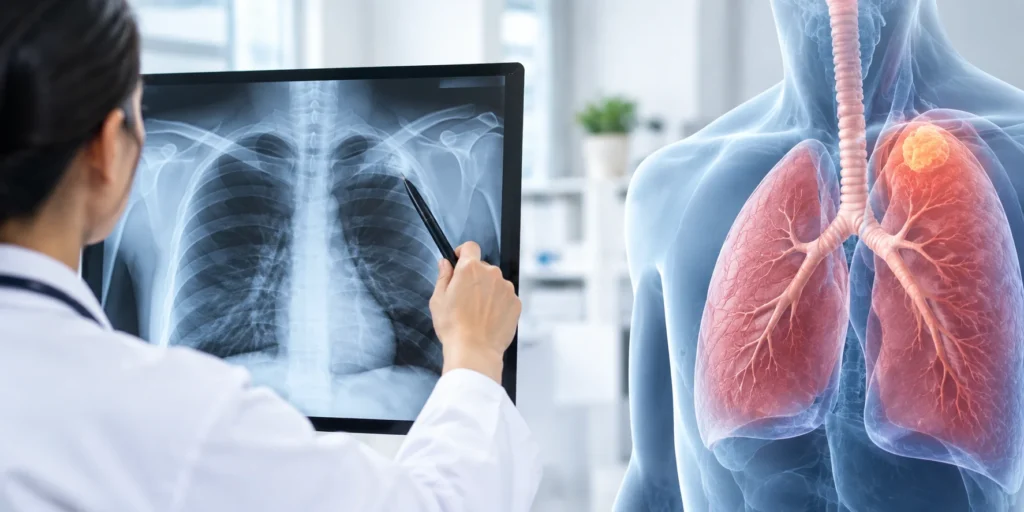
Lung cancer usually heads inward. It creeps toward the middle of the chest or burrows into the airways. This one flips the script. A Pancoast tumor sets up at the very top of the lung, the apex, then reaches outward into whatever’s crowded around it: the first and second ribs, the lower brachial plexus nerves, the subclavian vessels, the odd time the spine too. Sitting that high and that far from the airways, it skips the cough and the breathlessness people expect. What it hands you instead is shoulder pain. And that’s the whole trap, because the shoulder gets blamed, treated, and re-treated for months before a chest scan ever enters the picture.
According to Dr. George Karimundackal, a leading Thoracic Surgeon in Mumbai, “A patient comes in with shoulder pain and arm weakness. Sometimes a drooping eyelid. The shoulder or the neck gets investigated first, and the calendar keeps turning. A plain chest X-ray tends to miss it, since the lung apex hides behind the collarbone. You have to actively suspect it to order the scan that shows it. Caught early enough, trimodality treatment can offer a genuine chance of cure.”
What Are the Symptoms of a Pancoast Tumor?
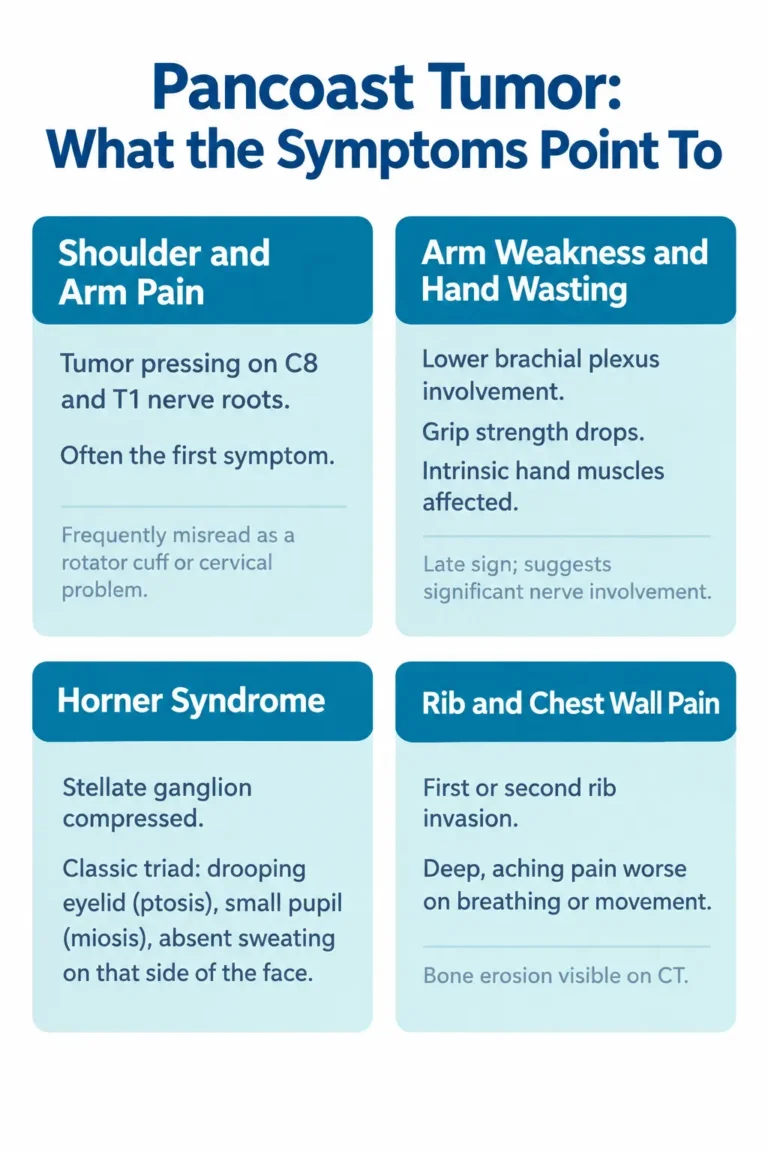
Read the symptoms right and they point straight to what the tumor has invaded. The infographic below maps the four main clinical features and what each one tells you about its reach.
Here’s what the cards leave out: the long stretch between that first ache and a real diagnosis. Shoulder pain by itself almost never sends anyone for a chest scan, and on a plain X-ray the tumor tucks away behind the clavicle regardless. Pinning it down takes an MRI of the chest and brachial plexus alongside a CT. That staging workup sets the entire plan in motion, well before a surgeon ever joins the lung cancer treatment conversation, and you can read more about the options on our lung cancer treatment page.
How Is a Pancoast Tumor Treated?
Forget the standard lung cancer treatment approach here. What comes next depends on how deep the invasion runs and whether the tumor can be taken out at all.
Induction chemoradiation: Most operable Pancoast tumors are treated with chemotherapy and radiation first, well before surgery. The point is to shrink the mass and define its edges, so the resection that follows is cleaner and clear margins become far more likely.
En bloc surgical resection: After chemoradiation, the surgery removes the apical lung segment together with the affected ribs, chest wall, and any invaded nerve roots, lifted out as a single block. Divide the job across two operations and the margins suffer for it. One sitting, done properly.
Definitive chemoradiation for inoperable cases: Sometimes the tumor has already pushed into the vertebral bodies or the major vessels, or the patient just isn’t strong enough for surgery. In that situation, full-dose chemoradiation becomes the treatment on its own, not a lead-in to surgery. Cure is unlikely, but it keeps the local disease in check.
Targeted therapy or immunotherapy: Spot a driver mutation (EGFR, ALK, ROS1) or a high PD-L1 reading, and systemic drugs step up, especially when an operation isn’t on the cards. Molecular testing of the biopsy is routine now, not optional.
None of it starts without a firm diagnosis and proper staging, and the way the biopsy is taken feeds directly into the plan. Our post on VATS lung biopsy walks through exactly how that’s done.
Why Choose Dr. George Karimundackal?
Dr. George Karimundackal is one of India’s foremost thoracic surgeons, with 15 years and more behind him. Before his present post as Director, Thoracic Surgery at Nanavati Max Hospital, he held the Professor of Thoracic Surgery chair at Tata Memorial Hospital in Mumbai. A Pancoast tumor requires coordinated input from thoracic surgery, radiation oncology, medical oncology, and neurosurgery. Dr. George leads this multidisciplinary process, ensuring every case undergoes a full MDT review before treatment begins. His operative experience includes en bloc chest wall and apical resections, among the more demanding procedures in thoracic surgery. Every patient hears it plainly: the staging, what each phase of treatment involves, and what a realistic outcome looks like, all laid out before a single decision is made.”
Frequently Asked Questions
What is a Pancoast tumor?
A lung cancer that starts at the top of the lung and grows into the nearby nerves and ribs.
What is Horner syndrome in Pancoast tumor?
A drooping eyelid, a small pupil, and no sweating on one side of the face, caused by pressure on the stellate ganglion.
Is a Pancoast tumor always lung cancer?
Nearly always. On rare occasions a benign or spread-from-elsewhere lesion turns up in the same spot.
Can a Pancoast tumor be cured?
In selected cases, yes, with chemoradiation followed by surgery.
Disclaimer: This blog is for informational purposes only and isn’t a substitute for professional medical advice; please consult a specialist for diagnosis and treatment.