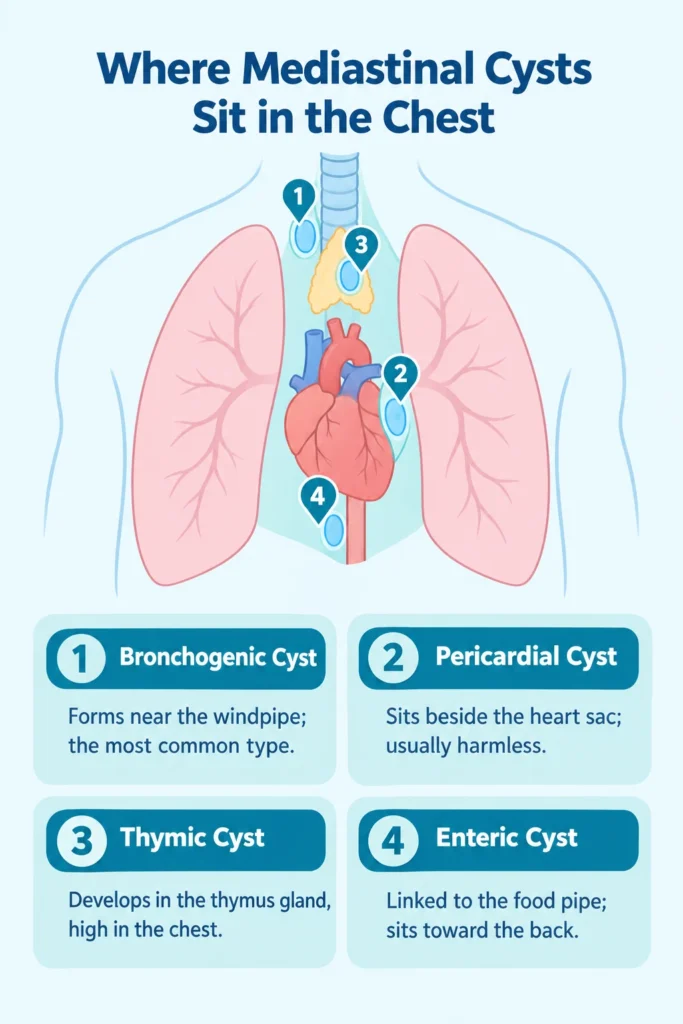
Think of the mediastinum as the crowded middle of your chest, the pocket between the lungs where the heart, windpipe, and major vessels all live. A mediastinal cyst is a fluid-filled sac that develops in that space. Most sit there quietly, and people go years without a clue they have one. Others don’t play nice. Those are the ones that may need removing once they grow, start causing symptoms, or change shape between scans.
According to Dr. George Karimundackal, a leading Thoracic Surgeon in Mumbai, “Plenty of these cysts turn up by accident on a scan done for something unrelated. The question is never just what it is, but whether it’s pressing on anything or changing over time. That’s what decides the next step, not the label alone.”
What Causes a Mediastinal Cyst to Form?
Most trace back to before you were even born. A small piece of chest tissue folds where it shouldn’t, and a cyst quietly takes shape.
Not every cyst dates back that far, though. A few develop much later, usually after an infection, a knock to the chest, or lingering inflammation. Here’s the part people miss: where a cyst sits often matters more than what it’s called. One curled around the airway is a very different problem from one parked beside the heart. That single detail shapes how often it’s checked and, if it comes to it, how it’s taken out. You’ll find the full range of keyhole chest procedures on our VATS surgery service page.
When Does a Mediastinal Cyst Need Surgery?
An operation isn’t the default answer. What really counts is how the cyst behaves and what it’s pushing up against.
Symptoms show up: Chest pain, breathlessness, or a cough that drags on tend to move things toward removal.
It keeps growing: Get bigger between two scans, and a cyst starts crowding whatever sits next to it.
The picture’s unclear: When a scan can’t promise the thing is harmless, taking it out lets someone actually study the tissue.
Trouble brewing: Some cysts can get infected, burst, or lean on the heart, and those are safer out than left alone.
These days, mediastinal cyst surgery usually means a few small keyhole cuts, a short hospital stay, and a quicker walk back to normal. No chest operation is free of trade-offs, mind you, and our post on VATS surgery risks spells out what patients should know going in.
Why Choose Dr. George Karimundackal?
Dr. George Karimundackal is among India’s leading thoracic surgeons, with over 15 years in the field. Before his current post as Director, Thoracic Surgery at Nanavati Max Hospital, he was Professor of Thoracic Surgery at Tata Memorial Hospital in Mumbai. He regularly manages mediastinal cysts, but no surgery is planned until the scan has been read closely to confirm that surgery is actually the right call.
Frequently Asked Questions
Are mediastinal cysts cancerous?
Usually not. A few call for tissue testing before anything’s ruled out.
Can a mediastinal cyst go away on its own?
Hardly ever. They tend to stick around and just get monitored unless they grow.
How long is recovery after mediastinal cyst surgery?
After keyhole removal, most people are home within a day or two and back to light routine inside two weeks.
Is mediastinal cyst surgery risky?
Every chest operation carries some risk, but keyhole cyst removal is low-risk and safe in trained hands.
Disclaimer: This blog is for informational purposes only and isn’t a substitute for professional medical advice; please consult a specialist for diagnosis and treatment.