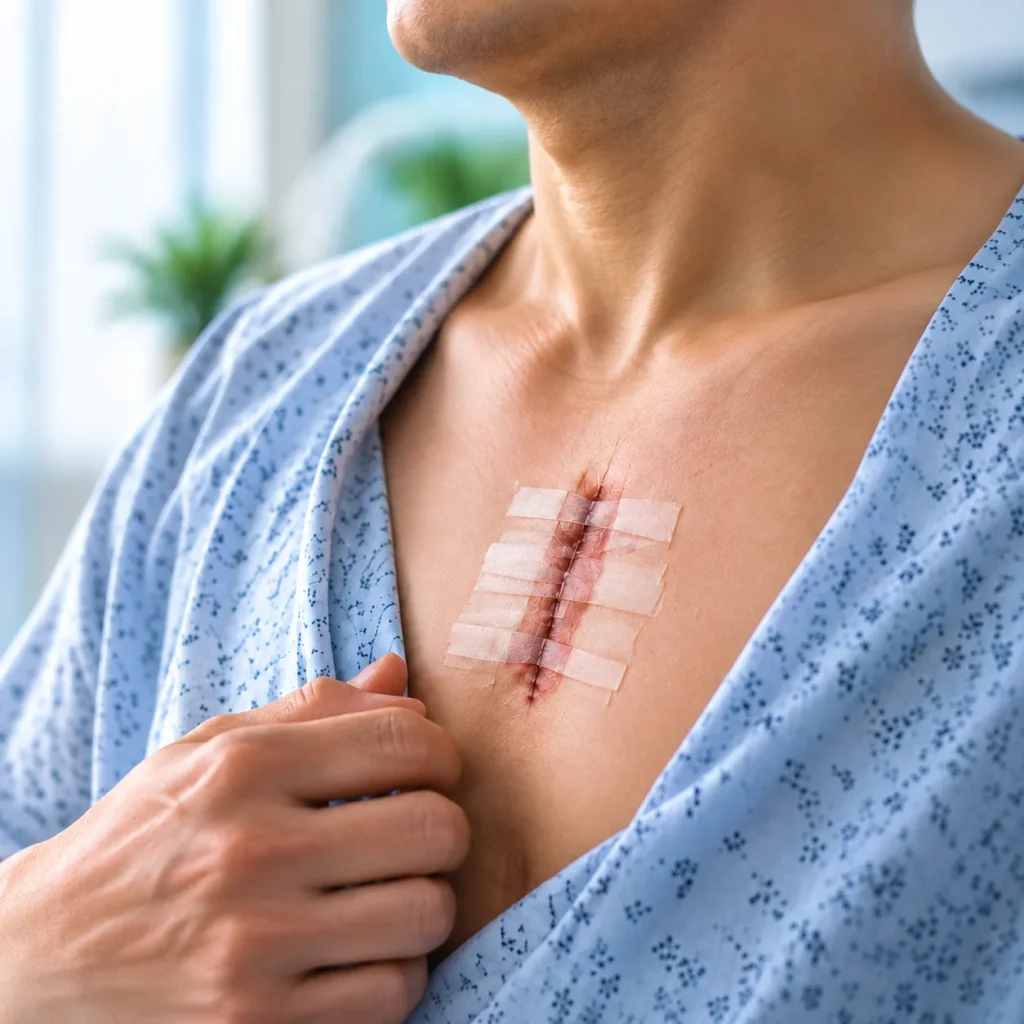
Chest surgery recovery goes beyond healing from the surgery itself. It is essential to take care of the surgical incision for proper healing and avoiding complications. Regardless of the technique used during the surgery, either minimally invasive or open surgical method, knowing how to identify what is normal and when to see a doctor can help patients have a successful recovery.
As noted by Dr. George Karimundackal, a leading thoracic surgeon in Mumbai, each patient’s recovery process is individual. Observing and properly caring for the incision area, as well as recognising early warning signs, can significantly improve recovery outcomes.
Dr. George Karimundackal specialises in advanced thoracic procedures. He offers comprehensive care for patients undergoing chest surgeries, including guidance on incision care after chest surgery, wound healing, and recovery.
How does a surgical wound repair itself after chest surgery? Let’s understand the healing process.
Following a surgical procedure, the body starts its repair mechanism in an effort to heal the incision made during the operation. This is a process of surgical wound healing that helps regain tissue strength following surgical injury.
Role of Skin and Tissue Repair
During healing:
Though the surface of the skin heals fast after a few weeks, healing of the deeper tissues takes several months.
Regular observation of the surgical area helps identify problems early, including:
Proper thoracic surgery incision care after discharge helps reduce complications and supports better recovery.
Wondering what happens to your incision after surgery? Let’s look at the typical healing stages.
The chest surgery incision healing process happens gradually and differs from person to person.
First Few Days After Surgery
During the initial recovery period, patients may notice:
These changes are usually part of the normal healing response.
First Few Weeks
As healing progresses:
Patients should continue following their surgeon’s advice regarding activity levels and wound care.
Long-Term Scar Maturation
Over the following months:
Scar healing can continue for up to a year or longer depending on individual healing ability.
Not every change around the incision is a cause for concern. Let’s understand the normal healing signs.
During recovery, some symptoms are expected as the body repairs itself.
Small amounts of swelling around the incision are common after surgery and usually improve gradually.
Minor bruising may occur due to small blood vessel changes during surgery.
Mild soreness or pulling sensations around the incision can occur as tissues heal.
Itching is common during healing as nerves recover and new skin develops.
These symptoms usually improve with time and proper care.
Connect with your surgeon for personalised recovery guidance.
Good chest surgery wound care can make recovery smoother. Let’s discuss how to protect your incision.
Proper post-surgery wound care is essential for preventing infection and supporting healing.

Follow your surgeon’s instructions regarding: Avoid applying creams, powders, or home remedies unless recommended.

If a dressing is advised:

Excessive stretching, lifting heavy objects, or sudden movements may put pressure on healing tissues.
Following Surgeon Instructions
Every surgery has different recovery requirements. Following your surgeon’s recommendations helps ensure safe healing.
The surgical incision healing time depends on factors such as the type of surgery, incision size, and overall health.
Generally:
A follow-up with your thoracic surgeon helps ensure the incision is healing properly.
Factors affecting recovery include:
How can you identify a problem early? Let’s look at the signs that need attention.
Although mild discomfort is normal, certain changes may indicate an incision infection after surgery.
Important signs of infection after surgery include:
Redness spreading around the incision may indicate inflammation or infection.
An infected wound may feel unusually warm compared with surrounding skin.
Yellow, green, or foul-smelling discharge requires medical evaluation.
Fever along with wound changes may indicate infection.
Increasing pain after initial improvement should not be ignored.
Noticing changes in your surgical wound?
Why do some incisions heal slower than others? Let’s understand the common reasons.
Several factors can affect recovery:
What complications can affect surgical wounds? Let’s explore.
Common Incision Problems After Thoracic Surgery
Some patients may experience:
The incision edges may separate partially or completely.
Fluid buildup under the skin may require monitoring or treatment.
Continuous leakage from the incision should be assessed.
Some patients develop raised or thick scars.
Proper follow-up helps identify and manage these concerns early.
Contact your surgical team if you experience:
Prompt evaluation helps prevent minor issues from becoming serious complications.
Reference Links:
Disclaimer: The information shared in this content is for educational purposes and not for promotional use.
WhatsApp us