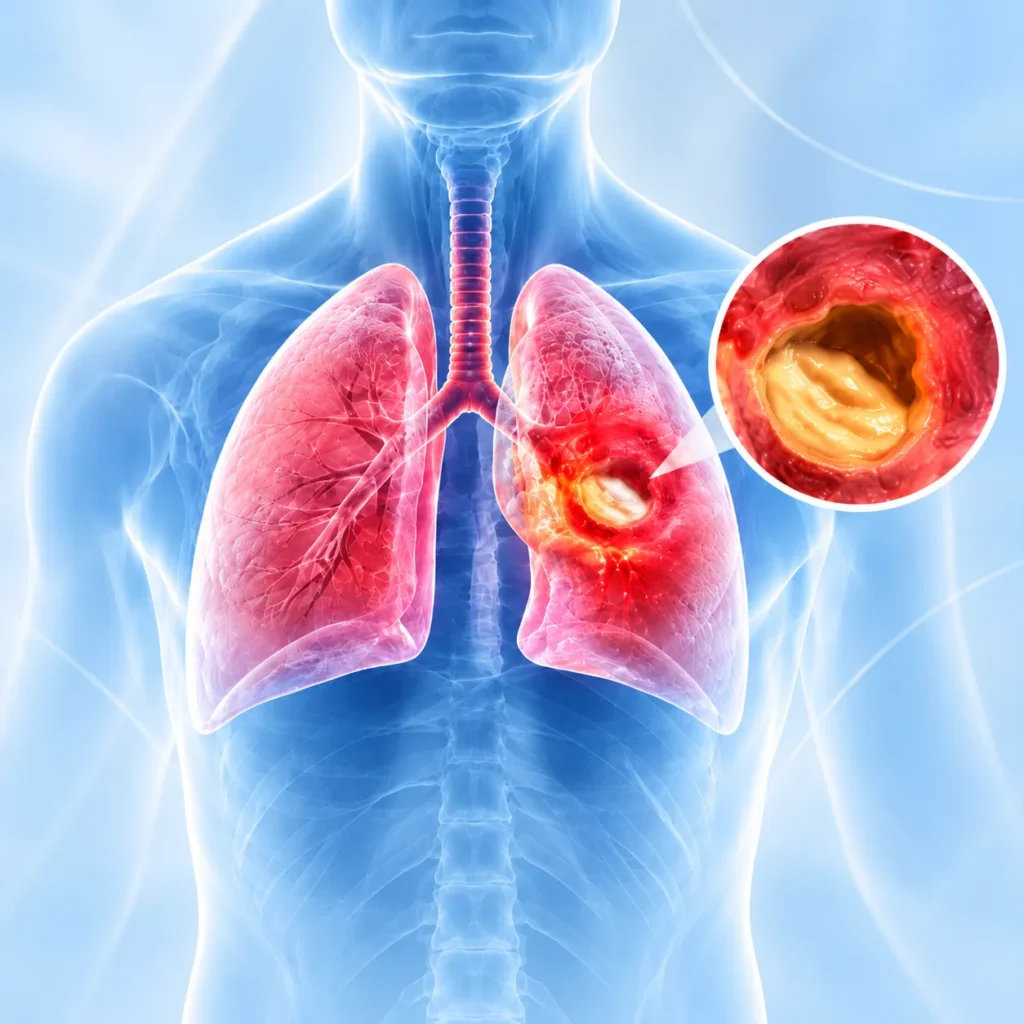
Persistent fever, continuous cough, and foul-smelling sputum sometimes indicate a deeper lung infection which requires more comprehensive management. The formation of a cavity containing pus in a certain part of the lung is the result of the breakdown of infected lung tissues. While most cases respond to antibiotic therapy, there are some cases when additional investigations or intervention are required.
According to Dr. George Karimundackal, a thoracic surgeon in Mumbai, it is critical to understand what causes the development of an abscess to prescribe proper treatment. In case if the symptoms do not improve, doctors need to explore possible reasons such as resistance to medications, airway obstruction, and complications that prevent infection from clearing.
Dr. George Karimundackal specializes in the diagnosis and treatment of complicated chest diseases and other thoracic disorders, such as lung abscesses.
Could a lung infection cause pus to collect inside the lung? Let’s understand what happens.
What Is a Lung Abscess?
Lung abscess is a localized cavity containing pus that occurs due to the destruction of lung tissue by infection. Usually, a lung abscess occurs when bacteria enter the lungs, particularly when infected material enters the lungs accidentally through inhalation.
While pneumonia affects the whole lung tissue, an abscess is a localized collection of pus within a cavity. Both conditions may occur simultaneously, and sometimes pneumonia may result in an abscess.
Lung abscess treatment usually takes time, as well as follow-up to confirm that the infection is resolving.
Why does an abscess develop in the lung? Let’s explore the common causes.
What Causes a Lung Abscess?
The main lung abscess causes include:
Identifying the cause helps doctors select appropriate treatment and decide whether further investigation is necessary.
Persistent lung infections need timely evaluation to identify the underlying cause
Connect with a specialist for an accurate diagnosis and appropriate treatment.
Which symptoms should raise concern? Let’s look at the warning signs.
What Are the Symptoms of a Lung Abscess?
Common lung abscess symptoms include:
Immediate medical attention should be sought in case of extreme trouble breathing, coughing up blood in large amounts, confusion or rapidly worsening symptoms.
How Is a Lung Abscess Diagnosed?
Proper lung abscess diagnosis can help ascertain the level of infection and treatment options.
Your doctor may suggest:
*Chest X-ray: This helps detect suspicious-looking cavity in your lungs or the presence of a fluid level.
*CT Scan: Helps detect images of the abscess, the affected tissues, and potential airways obstruction.
*Sputum or Blood Test: This aids in identifying the disease-causing pathogen and the body’s immune response against the infection.
*Bronchoscopy: Helps view your airways in case of obstruction, an uncommon infection or any underlying causes.
The choice of the test depends on the symptoms and your body’s reaction to the infection.
Can medication clear the infection without surgery? Let’s understand the first-line treatment.
How Is a Lung Abscess Treated With Antibiotics?
For most patients, lung abscess treatment with antibiotics is the initial approach. Antibiotics target the bacteria responsible for the infection, allowing the body to gradually clear the pus-filled cavity.
Treatment is selected according to the suspected organisms, the patient’s condition, test results, and local antibiotic resistance patterns. Doctors may adjust medication when culture results become available.
Treatment often continues for several weeks, sometimes longer, depending on the abscess size, clinical improvement, and follow-up imaging. Fever, breathing, appetite, and sputum production are monitored to assess progress.
Patients should complete the prescribed course and avoid stopping antibiotics without medical advice.
What if the fever and cough continue despite medication? Let’s explore why treatment may not work as expected.
Why Do Antibiotics Fail to Treat a Lung Abscess?
Doctors consider several factors when antibiotics don’t work in the case of a lung abscess.
The following are frequent causes:
* Inadequate antibiotic coverage: Pathogenic microorganisms may not be responsive to a selected drug.
* Obstruction of airways: The patient cannot naturally drain out the infected material.
* Presence of complications: There may be a large amount of an abscess, destruction of tissues, or the spread of an infection.
* An incorrect diagnosis: Some other condition may cause similar symptoms.
In case the fever doesn’t improve, it is time to see a doctor again. Further imaging, cultures, or bronchoscopy will help understand the root cause of a problem and to decide on the drainage.
When Does a Lung Abscess Need Drainage or Surgery?
There are cases when a drainage procedure or surgery is not needed. But lung abscesses may be drained when an appropriate antibiotic therapy does not help and the abscess is difficult to clear or complications occur.
Image-guided drainage
A catheter may be inserted through the chest wall into a suitable abscess under imaging guidance. This is considered selectively because the procedure carries risks, including air leakage and bleeding.
Bronchoscopic drainage
It is possible to use a bronchoscope in order to drain a lung abscess if it is associated with the respiratory tract or to remove an obstruction causing the infection.
Lung abscess surgery
This method is used in certain cases when there are persistent infections regardless of appropriate treatment, destruction of tissue, uncontrolled bleeding or other lung abscess complications.
The choice depends on abscess location, patients’ general health and risks of each approach. A thoracic surgeon assists in the choice of procedure necessity and its safety.
Is a lung abscess not improving with antibiotics?
Seek evaluation to identify the cause and discuss whether further treatment or drainage is needed.
The answer to how long does a lung abscess take to heal depends on the size of the cavity, the organism involved, underlying health conditions, and response to treatment.
Fever and general symptoms may begin improving before the abscess disappears completely. Healing can take several weeks or longer, and follow-up imaging may be needed to confirm progress.
Attend scheduled appointments and take medication as prescribed. Persistent fever, worsening cough, new chest pain, or increasing breathlessness warrants prompt reassessment.
Frequently Asked Questions
1. Is a lung abscess serious?
In some cases, this disease is rather serious; however, if it is adequately treated, patients often recover quickly.
2. What is the most common cause of a lung abscess?
The most typical cause of a lung abscess is aspiration of oral secretion with the bacteria.
3. Can a lung abscess heal with antibiotics alone?
Yes. It is usually treatable with the use of antibiotics; yet, some types of abscesses require drainage or surgery.
4. Is lung abscess contagious?
A lung abscess itself is not usually infectious; however, there can be an infectious cause of it, which involves certain pathogens.
5. Can a lung abscess cause coughing up blood?
Yes, this is possible; a person with a lung abscess may have streaks of blood in the phlegm.
6. When is lung abscess drainage necessary?
If medical therapy did not produce positive results, or complications arise, doctors may think about draining the abscess.
7. Can a lung abscess return after treatment?
Yes, it is possible to have a relapse of the illness particularly if the underlying cause such as airway obstruction or aspiration, is left untreated.