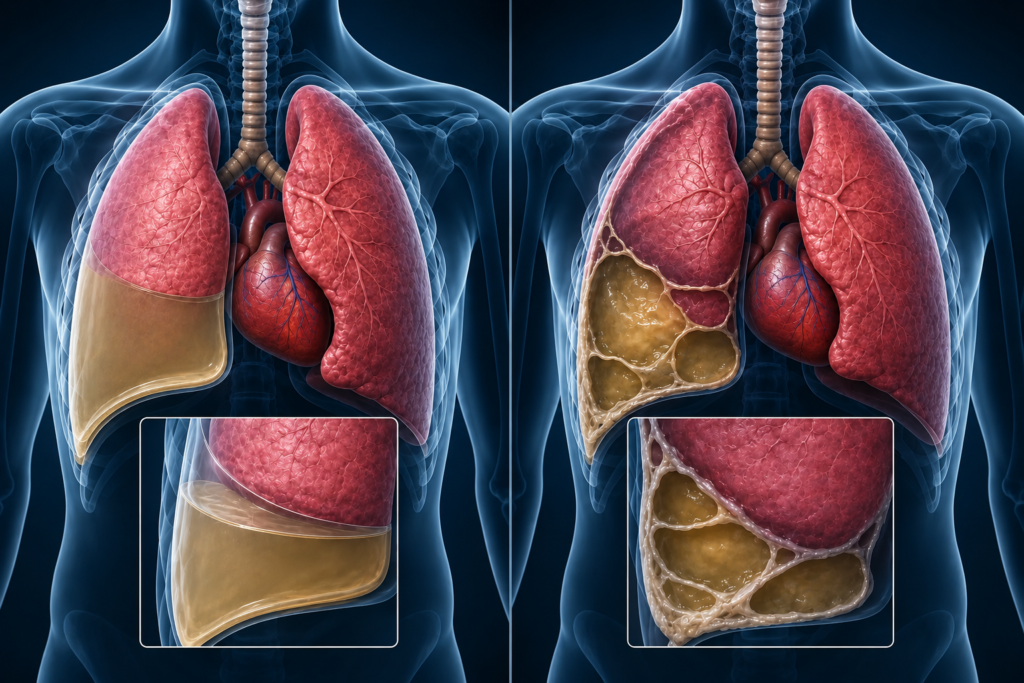
Fluid gathering around the lungs doesn’t always point to the same thing. Pleural effusion is the wider label, and it covers any abnormal pool of fluid caught in the space between the lung and the chest wall. Empyema sits inside that same group, but it runs more serious, the fluid there has turned into a live infection, thick with pus, white cells and bacteria. The two share a location but call for very different management.
According to Dr. George Karimundackal, a leadingThoracic Surgeon in Mumbai, “Patients hear ‘fluid around the lung’ and assume it’s one diagnosis. It isn’t. A plain effusion often drains once and doesn’t come back. Empyema is different, thick and infected, and a needle alone won’t clear it the way it clears simple fluid. Miss that distinction early, and treatment falls behind the infection fast.”
What Causes Pleural Effusion and Empyema?
Two different processes land you in the same spot: fluid where it shouldn’t be.
Heart or liver failure: a weak heart or a liver that’s lost its grip on protein levels sends fluid backing up into the pleura. Plain fluid. No infection involved.
Pneumonia left untreated: infection in the lung spreads next door, into the fluid sitting beside it. Fastest, most common road to empyema.
Cancer or pulmonary embolism: a tumor or a blood clot can each force fluid into that space. Infection usually has nothing to do with it.
Chest surgery or trauma: surgery or an injury to the chest can hand bacteria a direct route into the pleura. Another common empyema trigger.
None of these look alike on a scan, and none get managed the same way. Sorting out which one you’re dealing with is what anyVATS surgery decision comes down to.
Empyema vs Pleural Effusion: Key Differences
Feature
Pleural Effusion
Empyema
Fluid type
Clear or straw-colored, transudate or exudate
Thick, cloudy pus
Underlying cause
Heart failure, liver disease, cancer, embolism
Untreated pneumonia, chest infection, trauma
Fluid pH
Above 7.2
Below 7.2
Usual treatment
Drainage or medication, often resolves
Antibiotics, chest tube, often surgery
Fluid pH is the number that often decides it. Above 7.2, drainage or medication usually suffices. Drop below that, and antibiotics alone won’t clear what’s sitting in that space. Thick, infected fluid needs draining, and in more advanced cases, surgery.
A scan that shows fluid is where the question begins, not where it ends. That same principle applies to other chest problems as well, and our piece onthymoma surgery covers one of those.
Why Choose Dr. George Karimundackal?
Dr. George Karimundackal is one of India’s leading thoracic surgeons with over 15 years of experience. He was previously Professor of Thoracic Surgery at the Tata Memorial Hospital in Mumbai before taking up his current role as Director, Thoracic Surgery at Nanavati Max Hospital. His approach begins with correctly staging the fluid, whether it’s a transudate, an exudate, or frank pus, since that finding decides between drainage, antibiotics, or surgery. Decortication for chronic empyema is a routine part of his practice, not a case referred elsewhere.
Read the staging wrong at the start and you can lose weeks to antibiotics while an infection that really needed draining sits there. He takes each patient through what the fluid analysis is actually saying, and what it means for their treatment, before anything gets decided
Frequently Asked Questions
How does empyema differ from pleural effusion?
Effusion is plain fluid. Empyema means that fluid has turned infected.
Can pleural effusion become empyema?
Yes, particularly when an infected effusion goes untreated for too long.
Is pneumonia the only cause of empyema?
No. Pneumonia is common, but trauma or surgery can trigger it too.
Does empyema always need surgery?
No, mild cases often clear with drainage alone; severe ones need surgery.
Disclaimer: This blog is for informational purposes only and isn’t a substitute for professional medical advice; please consult a specialist for diagnosis and treatment.