- Have any questions?
- 085913 90567
- drgeorgechestdiseases@gmail.com

Robotic Surgery vs Open Surgery

Chest Pain Causes: When Is It Serious?
June 10, 2026
What Is a Thoracic Surgeon?
June 14, 2026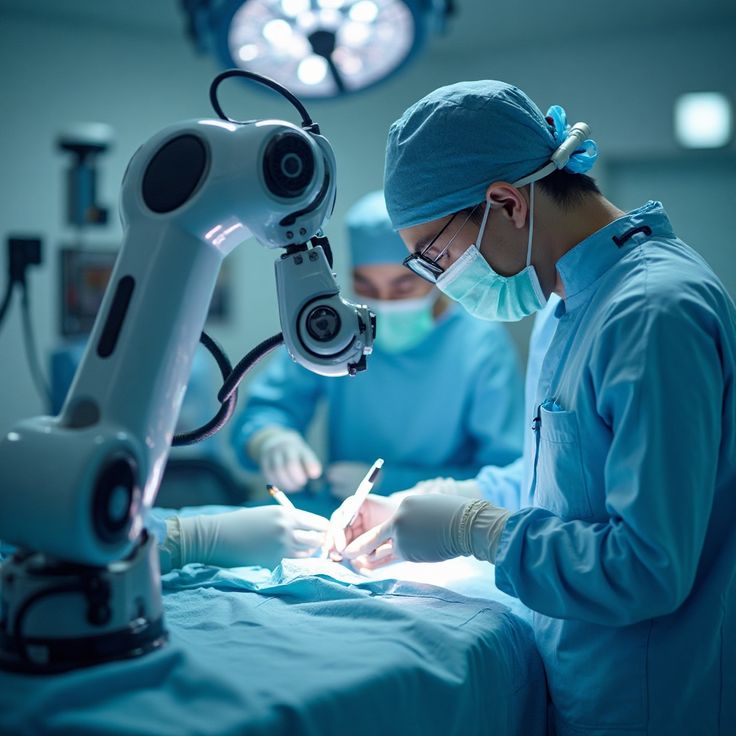
Robotic thoracic surgery and open thoracotomy achieve the same surgical goal through completely different means. One uses 3 to 4 small port incisions and a robotic platform with 3D magnified vision. The other requires a 15 to 25cm incision, rib spreading, and weeks of chest wall recovery. For the right patient and the right condition, the oncological result is equivalent. What changes substantially is what happens in the days and weeks after the operation.
According to Dr. George Karimundackal, a leading Thoracic Surgeon in Mumbai,
“Open surgery is not obsolete. There are cases where it is the only correct choice. But for most thoracic conditions we treat today, robotic surgery gives the patient the same cancer outcome with a fraction of the recovery burden. Choosing the right approach is about the specific case, not a blanket preference for one technique.”
Robotic Surgery vs Open Surgery at a Glance
Robotic Surgery | Open Thoracotomy | |
Incision | 3 to 4 ports of 8 to 12mm | 15 to 25cm with rib spreading |
Hospital stay | 2 to 4 days | 7 to 10 days |
Return to activity | 3 to 4 weeks | 6 to 10 weeks |
Post-op pain | Low, oral medication | Significant, IV analgesia often needed |
Oncological outcome | Equivalent for most stages | Equivalent for most stages |
Best suited for | Stage I to III NSCLC, mediastinal tumours, thymectomy | Extensive local invasion, complex vascular involvement |
How Do Robotic and Open Thoracic Surgery Actually Differ?
The technical gap between the two approaches is wide, and it shows up most clearly in recovery rather than in cancer outcomes.
- Visualisation and precision: Robotic platforms provide 3D magnified vision at 10 to 15 times magnification with articulating instruments that move with far greater range of motion than the human wrist allows through a thoracotomy incision.
- Chest wall trauma: Open thoracotomy requires the ribs to be spread, sometimes forcibly, to give the surgeon access. Robotic thoracic surgery eliminates this entirely. Ports enter between the ribs without spreading them, which is why pain after robotic surgery is manageable on oral medication within 48 to 72 hours.
- Blood loss and transfusion rate: Published series comparing robotic and open lung resections consistently show lower intraoperative blood loss with robotic approaches.
- When open surgery remains the right choice: Tumours with extensive invasion of the central bronchus, pulmonary artery, or chest wall, cases requiring cardiopulmonary bypass, and situations where the robotic platform would be technically limited are still managed with open access.
The robotic advantage is not infinite. It shrinks as tumour complexity increases. Knowing precisely where that line sits is what separates a thoracic specialist from a generalist offering robotic surgery as a feature.
Which Patients Benefit Most From Robotic Over Open Surgery?
Not every patient needs robotic surgery, and not every patient is a candidate. The selection decision drives the outcome.
- Early to intermediate stage lung cancer: Stage I and Stage II NSCLC patients are the clearest beneficiaries. Multiple published series confirm that robotic lobectomy and segmentectomy achieve equivalent lymph node clearance and margin status compared to thoracotomy, with significantly lower morbidity.
- Mediastinal tumours and thymectomy: Robotic access to the anterior mediastinum is technically superior to open access for many thymoma resections.
- Patients with reduced physiological reserve: Elderly patients, those with borderline lung function, and patients who have already received chemotherapy or radiation before surgery benefit disproportionately from the lower trauma of robotic access.
- Locally advanced NSCLC at specialist centres: Selected Stage III patients managed at high-volume robotic programmes are now being offered robotic resection after neoadjuvant treatment.
Robotic surgery is not the right answer for every chest condition, but for the conditions it suits, it consistently delivers the same cancer outcome with a fundamentally different patient experience. Understanding both approaches and what drives the selection decision is explored in more detail in this comparison of VATS vs RATS.
Why Choose Dr. George Karimundackal?
Dr. George Karimundackal, MBBS, MS (General Surgery), MCh (Surgical Oncology), MRCS Edinburgh, is Director of Thoracic Surgery at Nanavati Max Super Speciality Hospital, Mumbai, and one of India’s foremost exponents of robotic assisted thoracic surgery. With over 15 years as a thoracic surgeon and more than 1,000 minimally invasive thoracic procedures performed, he has the volume and case complexity experience to make the robotic versus open decision on clinical grounds rather than institutional preference. Formerly Professor of Thoracic Surgery at Tata Memorial Hospital, every surgical decision goes through a structured tumour board review before it is finalised.
Frequently Asked Questions
For most early to intermediate stage thoracic conditions, robotic surgery achieves equivalent oncological outcomes with significantly less pain, shorter hospital stay, and faster recovery than open thoracotomy. Open surgery remains the standard for cases with extensive local invasion or technical limitations.
Robotic thoracic surgery patients are typically discharged in 2 to 4 days and return to normal activity within 3 to 4 weeks. Open thoracotomy recovery takes 6 to 10 weeks on average, with a significantly longer hospital stay and higher post-operative pain burden.
Lung cancer lobectomy and segmentectomy, mediastinal tumour resection, thymectomy, and selected oesophageal procedures are all routinely performed robotically at high-volume centres. Complex resections requiring cardiopulmonary bypass still require open access.
Yes. Robotic thoracic surgery uses 3 to 4 small port incisions of 8 to 12mm each. Open thoracotomy requires a 15 to 25cm incision with rib spreading, which accounts for most of the post-operative pain and extended recovery.