- Have any questions?
- 085913 90567
- drgeorgechestdiseases@gmail.com

Minimally Invasive Esophagectomy: What to Expect?

Bronchiectasis Surgery: When Is It an Option?
September 25, 2026
Aspergilloma Surgery: Who Needs It and Why?
September 26, 2026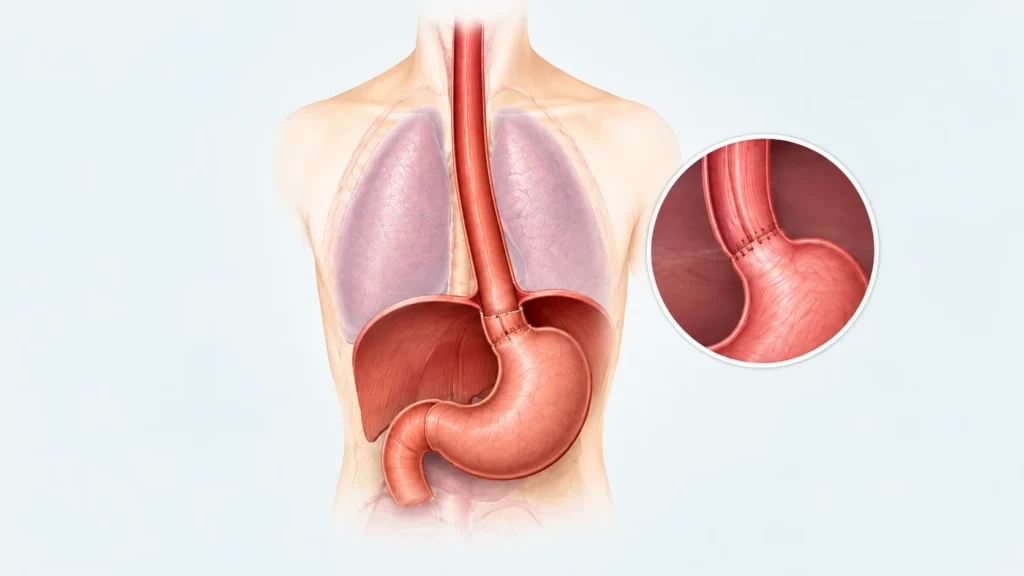
Most patients arrive knowing they need the esophagus removed, but not what that actually means week by week. A minimally invasive esophagectomy uses small keyhole cuts, a camera, and specialised instruments to take out part or all of the food pipe, rather than a long incision across the chest and belly. The stomach gets reshaped into a tube, the gastric conduit, and repositioned in the chest to take over food passage. Smaller cuts from the outside. The same operation underneath.
According to Dr. George Karimundackal, a Thoracic Surgeon in Mumbai, “Patients focus on getting through the surgery. What catches them off guard is the six months after. How the stomach behaves when it’s been reshaped and moved into the chest is something most people haven’t thought about. The ones who adjust quickest are usually the ones who understood what was coming before they went in.”
What Are the Steps of a Minimally Invasive Esophagectomy?
Two phases, same operation. The chest work and the abdominal work happen one after the other.
Chest phase (thoracoscopic): small ports go between the ribs. A camera inside the chest lets the surgeon free the esophagus from surrounding tissue while removing the lymph nodes alongside it as part of the cancer operation.
Abdominal phase (laparoscopic): keyhole access through the abdomen. The surgeon shapes the greater curve of the stomach into a tube, keeping the blood supply running along its edge intact. That preserved supply is what keeps the conduit viable once it’s been pulled up.
Anastomosis: the conduit meets the remaining esophagus and gets joined, either inside the chest as in the Ivor Lewis approach, or at the neck in the McKeown technique. Which approach depends on where the tumour sits. This join is the part watched most carefully in the first week.
Feeding tube and drainage: a jejunostomy tube goes in during surgery so nutrition begins within 24 hours of the operation finishing. A chest drain sits near the anastomosis in the early days. Both are standard parts of the procedure.
The full picture of what the recovery period involves, stage by stage, is on the esophageal cancer surgery page.
The quiet ones are actually the trickier cases to manage. A simple aspergilloma can sit undisturbed for years and then bleed without any warning. Because the bleeding originates from the bronchial arteries feeding the cavity wall rather than the lung tissue itself, antifungal tablets rarely stop it. The fungal ball needs a direct solution, not more medication. Any aspergilloma diagnosis warrants a proper assessment and a surgical opinion before things escalate. The full treatment pathway is on the aspergilloma treatment page.
What Changes After a Minimally Invasive Esophagectomy?
Esophagectomy recovery takes months, not weeks. Some of what changes is temporary. Quite a bit of it isn’t.
Eating pattern changes: the stomach is smaller now, sits in the chest, and drains differently. Six to eight small meals a day replaces three larger ones. Not a phase to get through. This is how eating works from here on.
Reflux and sleeping position: the anti-reflux valve is gone. Acid can move back up, particularly at night. Raising the head of the bed, by tilting the frame or using a wedge, stops this getting into the lungs. Most patients sleep this way permanently.
Nutritional supplements: iron, B12, and fat-soluble vitamins don’t absorb as effectively through the reshaped stomach. Lifelong supplementation is part of the standard discharge plan, not an afterthought.
Return to activity: light daily activity is usually possible within three to four weeks. Demanding physical work takes longer. Research data shows most patients who recover without significant complications report quality of life passing their pre-operative baseline by six months.
Esophagectomy is done primarily because of esophageal cancer, and whether that cancer is curable at the stage it’s caught shapes the whole treatment conversation. Our post on esophageal cancer curable covers that properly.
Why Choose Dr. George Karimundackal?
Dr. George Karimundackal is one of India’s leading thoracic surgeons with over 15 years of experience. He was previously Professor of Thoracic Surgery at Tata Memorial Hospital in Mumbai before taking up his current role as Director, Thoracic Surgery at Nanavati Max Hospital. He has performed over 1,000 minimally invasive thoracic procedures including VATS and robotic esophagectomies, and has run training programmes in these techniques for other surgeons. Every esophagectomy goes through a full multidisciplinary team review before an operation date is confirmed.
Frequently Asked Questions
Yes, though eating habits, meal size, and sleep position all change permanently.
Usually yes, unless a recurrent laryngeal nerve injury occurs during surgery.
Yes. Follow-up scans after surgery are routine to catch recurrence early.
Reflux, smaller meals, dumping syndrome, and some nutritional deficiencies are the usual ones.
References
- Minimally invasive or open esophagectomy for esophageal squamous cell carcinoma: outcomes systematic review: https://pmc.ncbi.nlm.nih.gov/articles/PMC12954734/
- Short-term outcomes and quality of life following minimally invasive esophagectomy in a tertiary care centre in Southern India: https://pmc.ncbi.nlm.nih.gov/articles/PMC10743200/
Disclaimer: This blog is for informational purposes only and isn’t a substitute for professional medical advice; please consult a specialist for diagnosis and treatment.