- Have any questions?
- 085913 90567
- drgeorgechestdiseases@gmail.com

What Are the Main Treatment Options for a Collapsed Lung?

Lung Abscess: When Do Antibiotics Fail and Is Surgery Needed?
October 26, 2026
Lung Function Tests Before Lung Surgery
November 5, 2026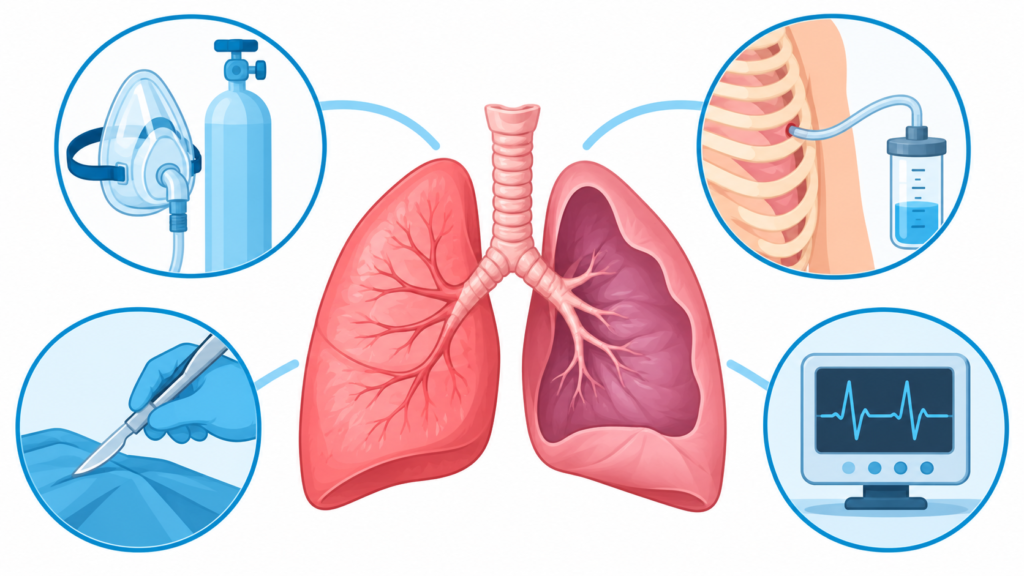
In a collapsed lung, or pneumothorax, air has seeped into the gap between the lung and the chest wall. The lung can’t expand fully. Collapsed lung treatment is not a fixed routine. What happens next hinges on how big the air pocket is, how much trouble the person has breathing, and their health beforehand. One person may need nothing more than a repeat X-ray. Another needs a chest drain or an operation.
According to Dr. George Karimundackal, Thoracic Surgeon in Mumbai, “Collapsed lungs vary widely. In a fit young person, a small air leak often needs only monitoring. Someone with COPD or old tuberculosis scarring may experience significant breathlessness from the same finding. The X-ray findings, symptoms, and condition of the underlying lungs are weighed together before monitoring, drainage, or surgery is chosen.”
How Is the Treatment for a Collapsed Lung Decided?
The cause comes first. After that, the size of the collapse is set against how comfortably the person is breathing.
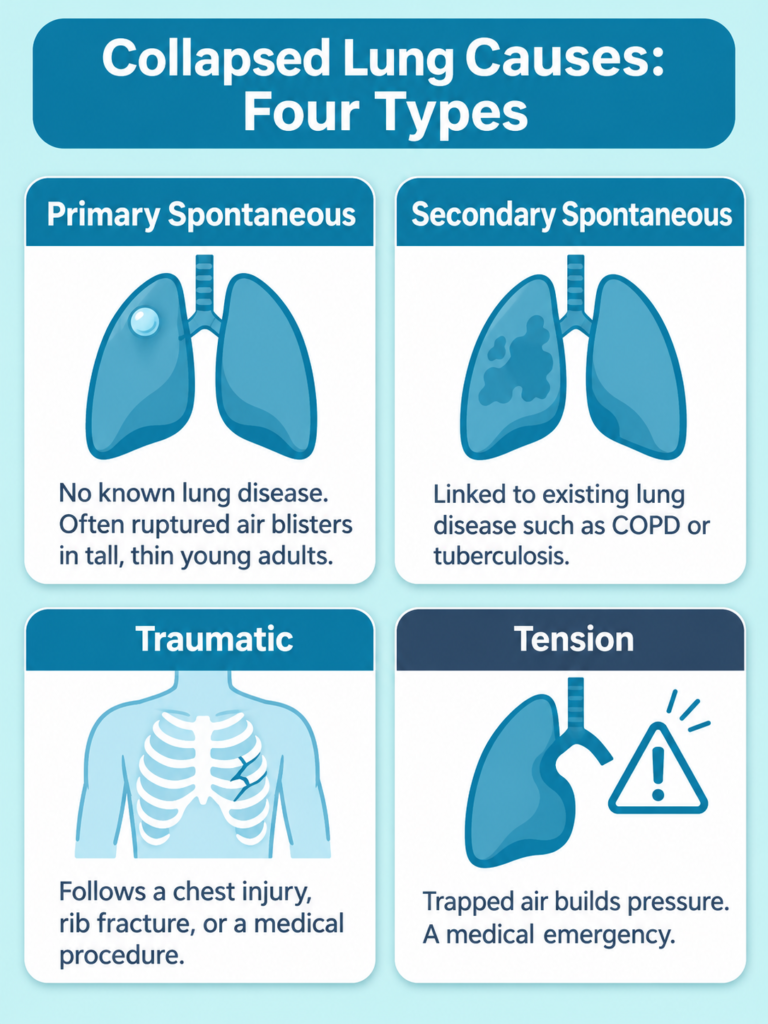
- Size of the collapse: the chest X-ray shows how much air is trapped. A thin rim, under about 2 cm, is often just watched. With a wider gap, the air is usually removed.
- Symptoms and breathing: a person who is short of breath at rest, has a rapid pulse, or shows low oxygen saturation is usually treated actively, whatever the X-ray shows. Some people with a large collapse feel almost normal. The X-ray and the person are assessed side by side.
- Underlying lung health: people with COPD, fibrosis, or old tuberculosis have very little healthy lung in reserve. A collapse in that setting is more dangerous. These patients are usually admitted to hospital rather than sent home.
- First episode or repeat: a first collapse is usually managed without an operation. When a collapse comes back on the same side, or affects both lungs at once, surgery to prevent further episodes is considered.
Further detail on assessment is available on the pneumothorax treatment page.
Which Treatment Options Are Used for a Collapsed Lung?
Treatment for a collapsed lung steps up as needed, from observation to drainage to surgery.
|
Option |
When It’s Used |
What It Involves |
|
Observation and monitoring |
Small collapse with little trouble breathing |
Follow-up X-rays while the air gradually clears |
|
Needle aspiration |
Bigger collapse, but the person is stable |
A syringe draws the air out through a thin needle or catheter |
|
Chest tube drainage |
A large collapse, lung disease, chest injury, or marked breathlessness |
A tube is passed between the ribs into a drainage bottle and stays until the lung is back up |
|
VATS surgery |
Repeat collapses, an air leak that won’t close, or both lungs affected |
Keyhole surgery closes the leaking air blisters |
Oxygen speeds up absorption: extra oxygen in the air a person breathes lowers the nitrogen dissolved in the blood, which draws trapped air out of the chest more quickly. It’s given in hospital with monitoring.
Tension pneumothorax is treated at once: air trapped under pressure can push on the heart and lower blood pressure. Emergency decompression is done immediately, before any scan.
Pain is treated throughout: it starts suddenly, usually on one side, and sharpens when the person breathes in deeply. Painkillers are given early, and a drain is easier to tolerate with regular doses.
Pleurodesis lowers the chance of a repeat: during the operation the lung is made to stick to the inside of the chest wall. No space is left for air to collect. Combined with closing leaking air blisters, this cuts repeat collapses considerably.
Urgent warning signs are covered separately in this post on emergency warning signs.
How Long Does It Take to Recover From a Collapsed Lung?
Collapsed lung recovery time depends on the treatment given. It also depends on how quickly the lung comes back up. The timings below are only a guide.

- Repeat collapses are the main long-term concern: about one in three people have another. The risk is highest in the first year or two. Surgery is sometimes discussed for that reason.
- Quitting smoking makes the biggest difference: tobacco damages the lung surface where the air blisters form. Anyone who continues smoking has a higher risk of experiencing another lung collapse. Stopping is the one change that helps most.
- Flying and diving need clearance: flying is normally put off until the X-ray shows the lung fully expanded, often for at least a week after that, and only with a doctor’s advice. Scuba diving is usually advised against permanently. Only a lung that has been treated surgically may be cleared, and only by a specialist.
- Follow-up imaging confirms healing: one more X-ray at the review visit shows whether the lung has stayed up. Fresh breathlessness or chest pain on one side after discharge needs checking that same day.
Details of how healing progresses after keyhole surgery are set out in this guide to VATS recovery time.
Key Takeaways: Treatment for a collapsed lung follows the size of the collapse, the symptoms, and the condition of the remaining lung. Small collapses are watched. Larger ones are drained. A collapse that keeps returning usually leads to surgery. Most people make a full recovery. A small collapse can settle in a week or two. Quitting smoking, and seeking medical clearance before flying or diving, lowers the chance of a second collapse.
Frequently Asked Questions
Often, yes. Expect sudden pain on one side that sharpens when breathing in.
Small ones often clear in a week or two. Larger collapses take longer.
Yes. After the lung re-expands fully, breathing returns to normal for most people.
Yes, most people do when treated promptly. Tension collapse is an emergency.
References
- Conservative management of spontaneous pneumothorax: A review of evidence and guidelines (PMC): https://pmc.ncbi.nlm.nih.gov/articles/PMC12208270/
- Spontaneous pneumothorax (PMC): https://pmc.ncbi.nlm.nih.gov/articles/PMC3275306/
Disclaimer: This blog is for educational and informational purposes only and should not be considered professional advice.