- Have any questions?
- 085913 90567
- drgeorgechestdiseases@gmail.com

Found a Spot on Your Lung? A Thoracic Surgeon’s Honest Take on Nodules

What Is a Thoracic Surgeon?
June 14, 2026
What Is a Thymoma and Does It Need Surgery?
July 1, 2026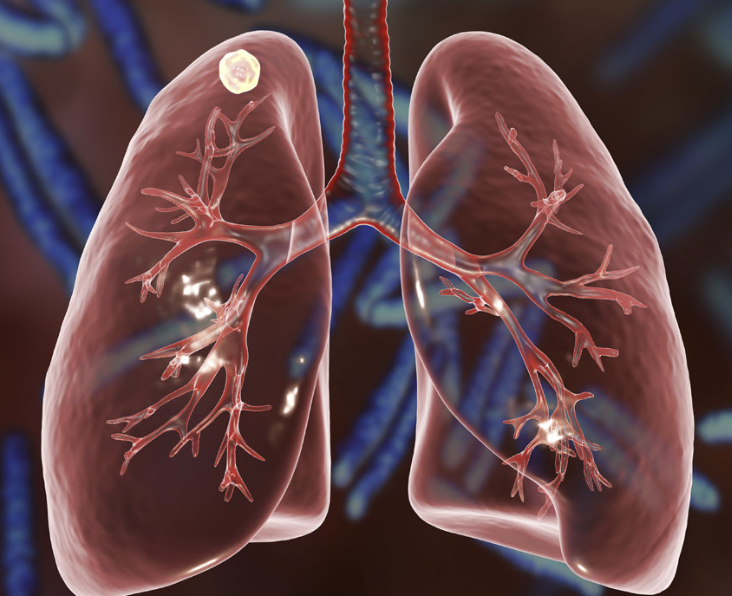
Most weeks, someone walks into my clinic clutching a CT report, and one line has been read so many times the paper is soft at the fold: “well-defined nodule in the right upper lobe.” They have already spent three sleepless nights on Google. By the time they sit down, half of them are convinced they have cancer.
So let me start where I start with every patient. A lung nodule is not a diagnosis. It is a finding. And in the large majority of people, it turns out to be nothing that will ever harm them.
What a nodule actually is
A pulmonary nodule is a small, roundish spot in the lung, usually under 3 cm across. Anything bigger we call a mass, and that is a different conversation. Most nodules are picked up by accident. You go in for a health check, a pre-surgery clearance, a bad bout of bronchitis, or even a heart scan, and the radiologist notices a spot that has nothing to do with why you came in. We call these incidental nodules, and we are finding far more of them now simply because CT scanners have become so good at seeing small things.
Here is the number worth holding on to: across all the nodules we detect, roughly 19 in 20 are benign. Not cancer. The trouble is that almost every lung cancer also begins life as a nodule, so we cannot wave them all away either. The whole job is telling one from the other without rushing to surgery for something harmless, and without sitting on something that needs to come out.
In India, the story usually starts with TB
This is where I part ways with most of the articles you will read online, because they are written for American patients. In Mumbai, the single most common reason I see a small calcified nodule is an old, healed tuberculosis infection. You may have had TB as a child and never known it. Your body walled it off, the spot calcified, and it has been sitting quietly in your lung for thirty years. Fungal infections leave similar scars.
That matters for two reasons. First, it is reassuring, because a densely calcified granuloma from old TB is almost never dangerous. Second, it cuts both ways: a fresh nodule can also be active TB rather than cancer, and the two can look maddeningly alike on a single scan. I have operated on patients sent to me as “lung cancer” who turned out to have a tuberculoma, and I have had the reverse too. Anyone reading your scan in this city has to keep both possibilities on the table.
What I am actually looking at on the scan

When a report lands on my desk, a few things tell me how worried to be.
Size. This is the big one. A nodule under 6 mm in someone who has never smoked carries a very low risk and often needs nothing more than reassurance. The risk climbs as the nodule gets bigger.
The edges. A smooth, round nodule behaves itself. One with spiky, irregular borders, what we call spiculation, makes me pay closer attention.
Calcium. A nodule packed with calcium in a neat pattern is almost always an old infection. Dense calcium is a friend.
Where it sits. Spots in the upper part of the lung carry slightly more weight, partly because that is also where old TB likes to live, so context matters.
You. Your age, whether you have smoked, your work history, a family history of cancer, exposure to asbestos. A 40-year-old who never touched a cigarette and a 65-year-old with thirty pack-years and the same 9 mm nodule are not the same case to me.
Why Choose Dr. George Karimundackal?
This is the part patients least expect. For most small nodules, the right next step is not surgery or even a biopsy. It is a follow-up scan.
Time is one of the most honest tests we have. If a nodule has not grown at all over two years, it is behaving like a benign lesion, and we can usually relax. So depending on size and your risk, I will often recommend a repeat low-dose CT in three, six, or twelve months. I know waiting is hard. Sitting with a spot in your lung and being told to come back in six months can feel like being ignored. It is not. A nodule that is truly dangerous reveals itself by changing, and watching closely is how we catch that early without putting you through an operation you may never need.
When a nodule is larger, growing, or has features ,we go further. A PET scan tells us how metabolically active the spot is. Sometimes we take a tissue sample through a needle or a bronchoscope. And in selected cases, the cleanest answer is to remove the nodule and have the pathologist look at it under the microscope.
When surgery is the right call
If it does come to that, the surgery today looks nothing like what your relatives may remember. I rarely need to open the chest. Most nodules I remove through keyhole VATS surgery or robotic-assisted thoracic surgery, often through a single small incision between the ribs. Patients are frequently up and walking the next day and home within a few. If the nodule turns out to be an early cancer, removing it at that stage is often the whole treatment, which is exactly why we do not ignore the worrying ones. You can read more about how we approach lung cancer treatment if that is the road your case takes.
What I would tell you if you were sitting across from me

Do not panic, and do not disappear either. The two mistakes I see are equal and opposite: the patient who is so frightened they avoid the follow-up scan, and the patient who is so relieved at “probably nothing” that they never come back. The nodule that gets people into trouble is almost always the one nobody kept an eye on.
Bring your old scans if you have them. A spot that has looked identical on three scans across five years is a settled question. And find a doctor who will actually sit and explain the report to you rather than hand it back with a shrug.
Frequently Asked Questions
No. About 95% of lung nodules are benign. Common causes include old, healed infections such as tuberculosis, which is especially frequent in India, as well as fungal infections and harmless scar tissue.
Size is one factor, not the whole picture. Nodules under 6 mm in a non-smoker carry a very low risk. Larger nodules, or ones with irregular spiky edges, deserve closer evaluation. Your smoking history and age matter as much as the millimetres.
Most do not. The usual approach is a follow-up CT scan to see whether the nodule changes over time. Surgery is reserved for nodules that are growing, larger, or have features that raise concern.
Not with certainty. A CT gives strong clues from size, shape, and calcium pattern, but a definite answer often needs a follow-up scan to check for growth, sometimes a PET scan, and occasionally a tissue sample.
If your nodule is being watched and is not changing, your physician can usually manage it. If it is growing, larger, or your doctor recommends a biopsy or removal, that is the point to see a thoracic surgeon experienced in minimally invasive lung surgery.
Dr. George Karimundackal is a thoracic surgeon in Mumbai and Director of Thoracic Surgery at Nanavati Max Super Speciality Hospital, with deep experience in minimally invasive VATS and robotic lung surgery. If you have been told you have a lung nodule and want a clear, unhurried second opinion,