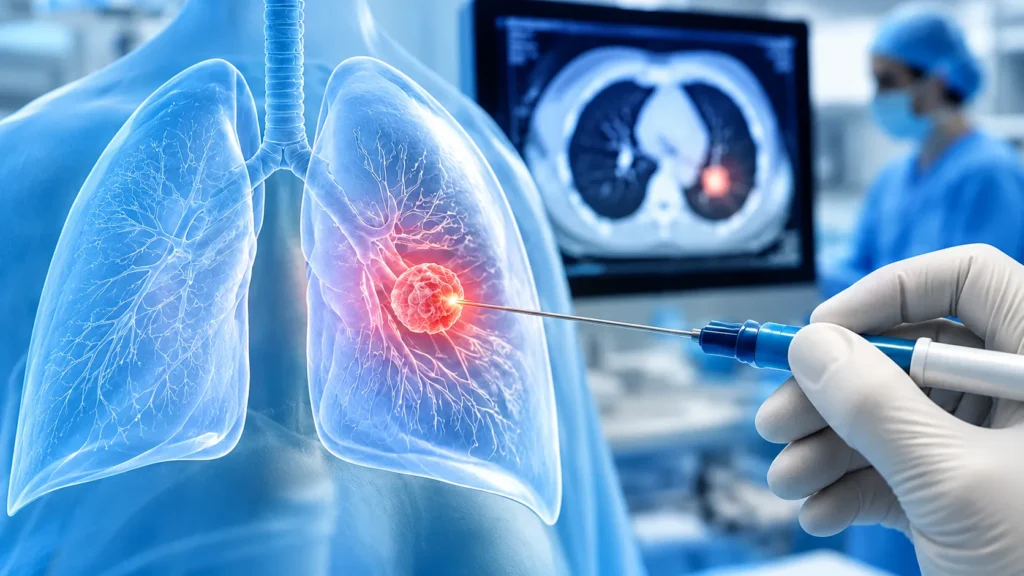
The diagnosis of a lung nodule during a scan can naturally cause concern but not all lung nodules indicate cancer. In fact, many of them are completely harmless and might have appeared because of previous infections, inflammation or even scars. But some nodules need additional investigation for further clarification of their nature.
Based on the statements by Dr. George Karimundackal, a highly respected lung cancer specialist and thoracic surgeon in Mumbai, a careful analysis should be conducted when the lung nodule has certain suspicious features such as the growth, irregular border, or changes over time. Lung nodule biopsy helps doctors examine the tissue and define the nature of the nodule.
Dr. George Karimundackal is known as an expert in the diagnosis and treatment of complicated chest conditions, among which are lung nodules and lung cancer. Being a highly qualified thoracic specialist with skills in minimally invasive procedures, he provides comprehensive care for patients requiring lung nodule evaluation, biopsy and treatment planning.
So, when is a lung nodule biopsy needed, and what happens during the procedure? Let’s understand.
What Is a Lung Nodule Biopsy?
Lung nodule biopsy is a diagnostic method whereby a sample of tissue is taken from a lung nodule. This tissue will be analyzed in a lab to confirm whether the nodule is cancerous, benign, or associated with other lung diseases.
A lung nodule may be identified by:
Although imaging scans give information about the nodule’s size and shape, a tissue analysis is necessary for an accurate diagnosis in many instances.
The results of a lung biopsy for lung nodules helps doctors understand:
Whether cancer cells are present
The type of abnormal cells
The best treatment approach if cancer is diagnosed
Why do some lung nodules need further testing? Let’s understand.
Why Is a Lung Nodule Biopsy Recommended?
Not every lung nodule requires a biopsy. Doctors consider several factors before recommending the procedure.
A biopsy may be advised when:
The nodule increases in size over time
The nodule has suspicious features on CT scan
There is a history of smoking
The patient has risk factors for lung cancer
Imaging results cannot confirm the diagnosis
Dr. George Karimundackal, a competent lung cancer specialist in Mumbai, may recommend biopsy when the benefits of obtaining a clear diagnosis outweigh the risks of the procedure.
A biopsy helps avoid unnecessary treatment for harmless nodules while ensuring suspicious nodules are evaluated early.
When is lung nodule biopsy needed? Let’s look at the important factors doctors consider
When Does a Lung Nodule Need a Biopsy?
Doctors usually assess:
Size of the Nodule
Larger nodules may require closer evaluation compared with very small nodules.
Growth Pattern
A nodule that increases in size during follow-up scans may need further testing.
Appearance on CT Scan
Features such as irregular borders or certain patterns may raise suspicion.
Patient Risk Factors
Factors such as smoking history, age, and previous cancer history may influence decisions.
PET Scan Findings
In some cases, PET imaging may help determine whether additional evaluation is required.
Have you been advised to evaluate a lung nodule? Expert assessment can help determine whether a biopsy is required and guide the next steps.