- Have any questions?
- 085913 90567
- drgeorgechestdiseases@gmail.com

Robotic Surgery vs VATS: Which for Esophageal Cancer?

Surgery vs Radiation: Which for Early Stage Lung Cancer?
July 7, 2026
Can You Get Lung Cancer Without Smoking?
July 13, 2026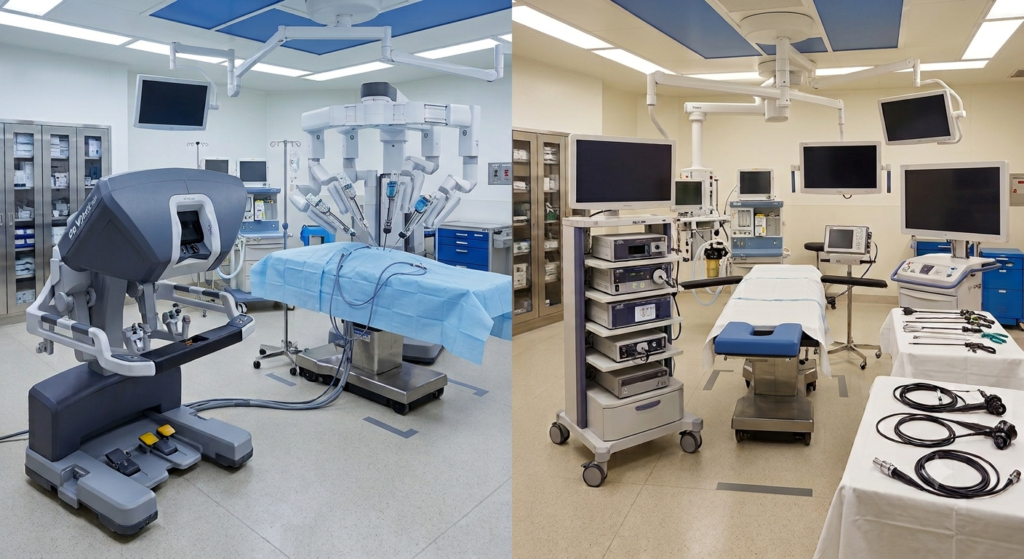
Both go in through small ports instead of a large open chest wound. Neither one wins outright. What decides it is the specific case, mainly how much lymph node work is needed and where exactly the tumour sits.
According to Dr. George Karimundackal, a leading Thoracic Surgeon in Mumbai, “Esophagectomy is about as demanding as thoracic surgery gets. Robotic platforms give real precision inside the mediastinum, especially near the recurrent laryngeal nerve. But VATS has years more data behind it, solid outcomes tracked over a long time. Neither replaces the other. It comes down to the case in front of you.”
Robotic vs VATS Esophagectomy at a Glance
|
Robotic Surgery |
VATS |
|
|
Visualisation |
3D magnified, wristed instruments |
2D, straight instruments |
|
Lymph node dissection |
More precise in tight spaces |
Well established, effective |
|
Learning curve |
Steeper initially |
More surgeons trained |
|
Cost |
Higher |
Lower |
|
Long term outcomes data |
Growing rapidly |
Extensive, decades of follow up |
How Does Robotic Surgery Compare to VATS for Esophageal Cancer?
Both aim at complete tumour removal with clean margins and proper lymph node clearance. Getting there just looks different depending on the tool.
- Instrument dexterity. Robotic wristed instruments bend more like a wrist should, not like the straight rigid tools VATS relies on. Inside the cramped mediastinal space, that extra range of motion matters most around the recurrent laryngeal nerve and near major vessels.
- Visualisation. Robotic gives 3D and magnified. VATS gives 2D. For an operation with almost no room for error, that depth perception difference shows up during the trickiest parts of the dissection.
- Lymph node yield. Several published series report higher or comparable lymph node counts with robotic approaches, particularly for extended mediastinal dissection. That feeds directly into staging accuracy and long term outcomes.
- Track record. VATS has decades of survival data behind it. Robotic numbers are climbing fast but haven’t matched that volume yet, not because the technique is inferior, just because it’s newer.
Neither platform changes what good oncological esophageal surgery actually requires. What changes is how cleanly the surgeon executes it inside a narrow, unforgiving field. A direct consultation on esophageal cancer treatment is the right place to start for patients weighing their options.
Which Patients Benefit Most from Robotic Esophagectomy?
This isn’t a surgeon preference question. Certain tumours and patient factors tilt the decision one way or the other.
- Wide nodal clearance needed. The added dexterity and 3D view generally reach nodes tucked behind vessels or near the airway more reliably than straight VATS instruments can, making robotic the stronger choice when extensive mediastinal dissection is required.
- Technically difficult tumour locations. Upper or mid esophageal tumours close to the trachea or major vessels benefit from the precision robotic instruments offer in tight anatomical corridors where VATS tools have less room to work.
- Centre volume and experience. A high-volume robotic programme will outperform a low-volume one regardless of platform. The same is true for VATS. Experience and case volume matter more than the technology label.
- Cost considerations. Robotic runs higher because of equipment and platform charges. Where VATS delivers the same oncological result for a given patient, that cost difference can reasonably tip the decision.
Done well by an experienced surgeon, either approach achieves strong oncological outcomes in resectable esophageal cancer. How curability plays out by stage matters just as much as which platform is used, and that’s covered properly in is esophageal cancer curable.
Why Choose Dr. George Karimundackal?
Dr. George Karimundackal, MBBS, MS (General Surgery), MCh (Surgical Oncology), MRCS Edinburgh, is Director of Thoracic Surgery at Nanavati Max Super Speciality Hospital, Mumbai. Fifteen plus years working exclusively in thoracic surgery, over a thousand minimally invasive procedures done, including published work on robotic esophagectomy with intraoperative nerve monitoring. That’s genuine, tested experience across both robotic and VATS platforms for esophageal cancer, not just familiarity with one. Every case goes through a full multidisciplinary tumour board to decide which surgical approach actually fits the tumour and the patient.
Frequently Asked Questions
Robotic surgery offers better dexterity and visualization in the narrow mediastinal space, particularly for lymph node dissection. VATS remains a well established alternative with strong long term outcomes data.
Most patients are hospitalised for 7 to 10 days after robotic or VATS esophagectomy, with return to normal activity over 4 to 6 weeks depending on overall fitness.
Yes, robotic surgery generally costs more due to equipment and platform charges, though outcomes for appropriately selected patients are comparable to VATS.
Patients needing extensive mediastinal lymph node dissection or with tumours in technically difficult locations often benefit most from the precision robotic platforms offer.