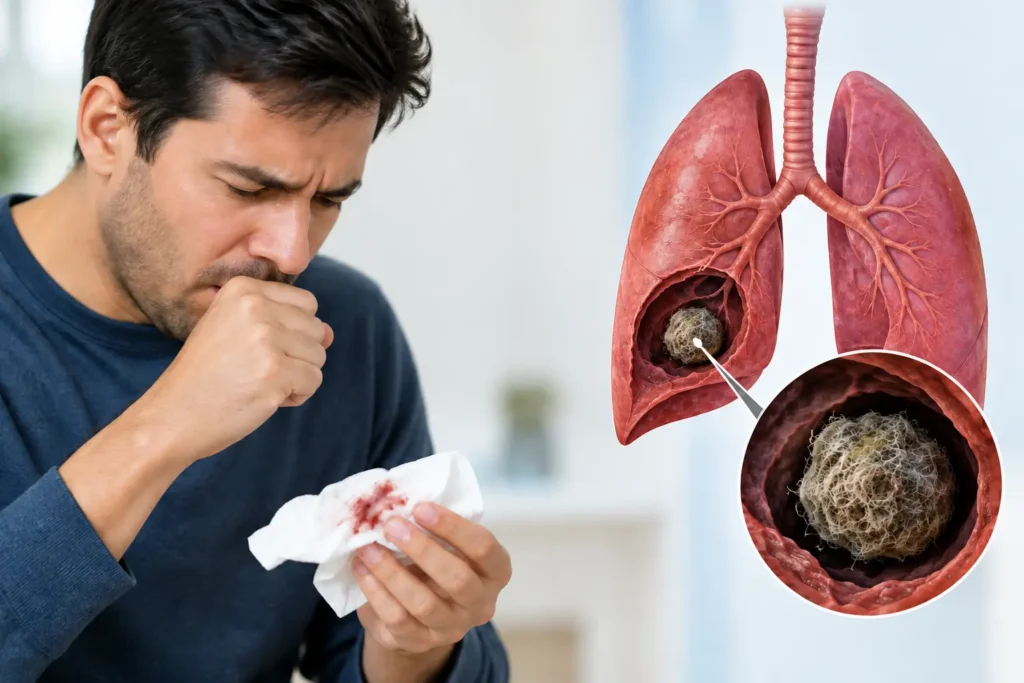
Blood in a cough is hard to ignore. While lung cancer or TB tend to come to mind first, there’s a condition that gets missed far more often than it should. Aspergilloma is a fungal mass, sometimes just called a fungus ball, that settles into a cavity the lung already has, usually one left behind by old tuberculosis or a previous infection. The Aspergillus mould doesn’t go hunting for healthy tissue. It moves into the damaged space and takes up residence. What causes the bleeding is the cavity’s own blood vessels, slowly eroded from the inside.
According to Dr. George Karimundackal, a leadingThoracic Surgeon in Mumbai, “Coughing up blood after TB is one of the most common things I see. People assume the TB is back. Often it isn’t. Aspergillus has been quietly sitting in the old cavity for months, sometimes longer. The scan tells the story quickly once you know what you’re looking for. A fungal ball inside a cavity has a very particular look, and the diagnosis usually follows fast.”
What Are the Symptoms of Aspergilloma?
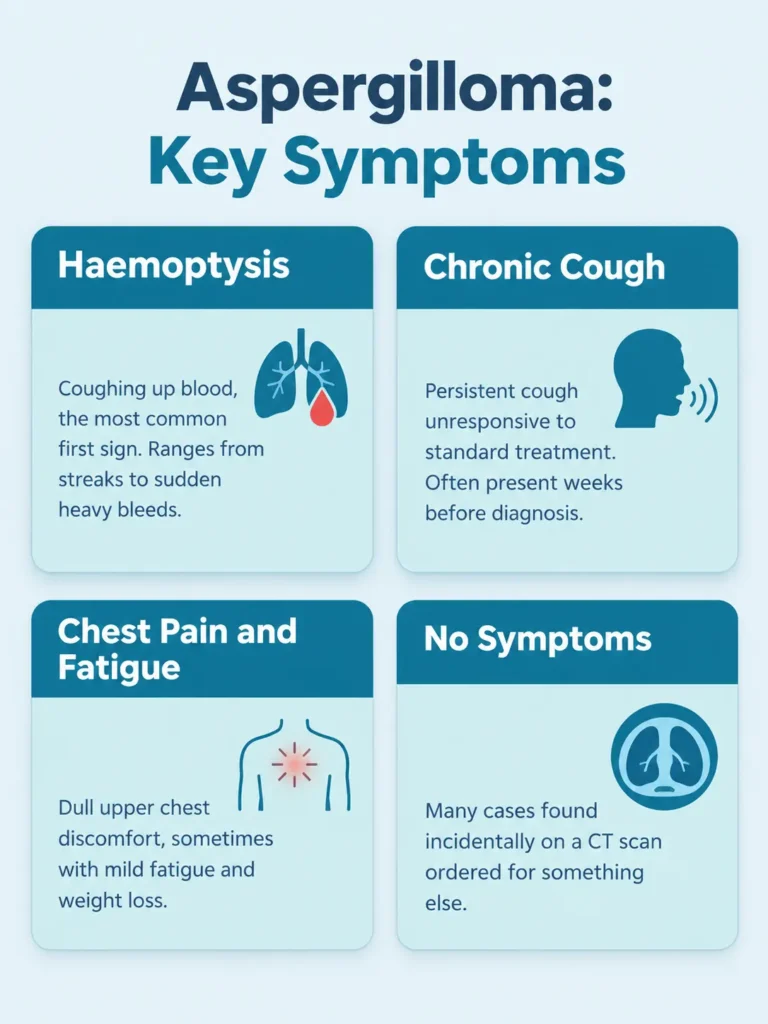
Not everyone with aspergilloma knows they have it. Several patients find it entirely by accident on a scan done for something else.
The quiet ones are actually the trickier cases to manage. A simple aspergilloma can sit undisturbed for years and then bleed without any warning. Because the bleeding originates from the bronchial arteries feeding the cavity wall rather than the lung tissue itself, antifungal tablets rarely stop it. The fungal ball needs a direct solution, not more medication. Any aspergilloma diagnosis warrants a proper assessment and a surgical opinion before things escalate. The full treatment pathway is on theaspergilloma treatment page.
How Is Aspergilloma Treated?
No single route fits every case. Aspergilloma treatment is guided by how symptomatic the patient is, how large the cavity has grown, and how much lung function they have left.
Observation and monitoring: a small, silent fungal ball in someone with already-compromised lungs may simply be watched with periodic CT scans. Surgery carries more risk than the lesion itself in some patients, and close monitoring is the right call.
Antifungal therapy: oral antifungals like voriconazole or itraconazole have a narrow role here. The drugs don’t penetrate the cavity wall well enough to reach the fungal mass in useful concentrations. They work better for the surrounding chronic aspergillosis than for the ball itself.
Bronchial artery embolisation: when bleeding is the immediate concern and surgery isn’t yet on the table, blocking the vessels feeding the cavity wall controls haemoptysis in most cases. But the fungal ball stays put, and the bleeding tends to return.
Surgical resection: for fit patients with recurrent or significant bleeding, surgery to remove the cavity and the surrounding diseased lung tissue is the most effective aspergilloma treatment available. Results after complete resection are good, and recurrence is rare.
To understand the TB cavity background where these fungal balls tend to form, our piece onlung cancer vs TB is worth a read.
Why Choose Dr. George Karimundackal?
Dr. George Karimundackal is one of India’s leading thoracic surgeons with over 15 years of experience. He was previously Professor of Thoracic Surgery at Tata Memorial Hospital in Mumbai before taking up his current role as Director, Thoracic Surgery at Nanavati Max Hospital.
Aspergilloma surgery isn’t technically straightforward. Old TB cavities have thickened, adherent walls and surrounding tissue that’s already been through a lot. Each case is planned individually after careful CT review and a lung function assessment, rather than a default approach. Both VATS and open resection are part of his practice, with the choice driven by the cavity’s location and the patient’s remaining lung reserve.
He makes sure patients understand what the scans show, whether surgery or monitoring is the right next step, and what outcome they can realistically expect either way.
Frequently Asked Questions
What are the first signs of aspergilloma?
Coughing up blood, often mild at first, is how most patients first notice it.
Can aspergillosis be cured?
Simple aspergilloma is usually cured by surgery; complex cases often need long-term antifungals.
Is Aspergillus in the lungs fatal?
Left untreated, chronic aspergillosis has a five-year mortality of up to 80 percent.
How do you treat a fungal ball in the lung?
Surgical removal of the affected lung segment is the most definitive aspergilloma treatment.
Disclaimer: This blog is for informational purposes only and isn’t a substitute for professional medical advice; please consult a specialist for diagnosis and treatment.