- Have any questions?
- 085913 90567
- drgeorgechestdiseases@gmail.com

What are Mediastinal Tumor Symptoms and is Surgery Needed?

How Is Pleural Effusion Diagnosed and Treated ?
May 14, 2026
Thoracic vs Cardiac Surgery: Key Differences?
May 14, 2026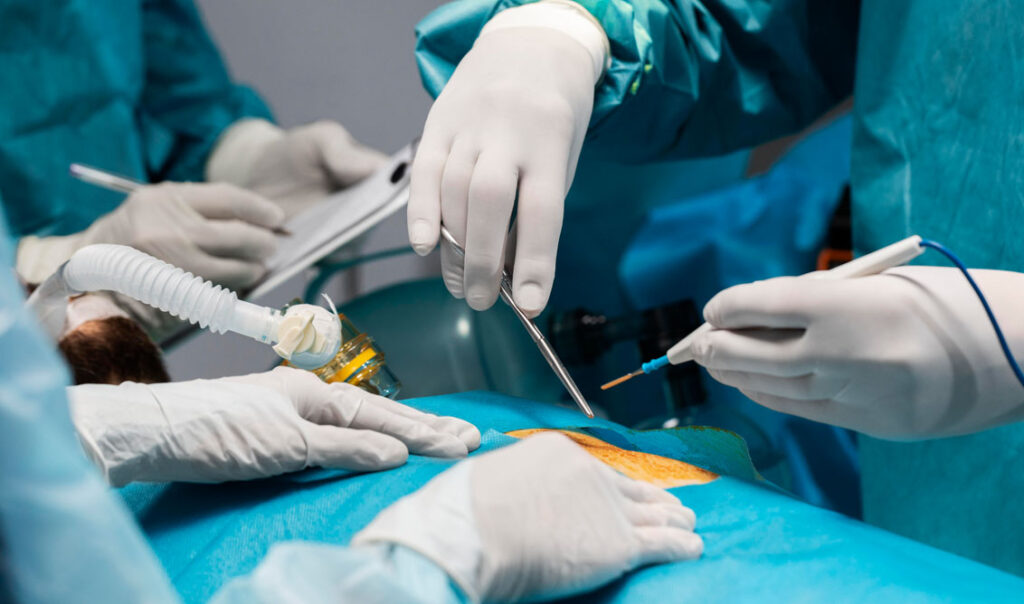
A mediastinal tumour grows in the space between both lungs containing the heart, trachea, esophagus, and major vessels. Five-year survival after surgical resection reaches 88.1% with mean overall survival of 71 months. Malignancy risk increases significantly with tumour size. Around 47% of patients present with superior vena cava syndrome at diagnosis.
According to Dr. George Karimundackal, one of the most experienced thoracic surgeons in Mumbai, mediastinal tumours are the cases that arrive latest because they sit in a location that produces symptoms only once they are already large. Most patients have no idea the space between their lungs contains anything worth worrying about until a scan finds something there.
What Is a Mediastinal Tumor and What Are the Symptoms?
Stage at Symptoms depend on how much fluid has accumulated and how quickly it developed. Small effusions are The mediastinum divides into anterior, middle, and posterior compartments each associated with different tumour types. Location within the mediastinum largely predicts the likely diagnosis before biopsy results arrive.
- Anterior mediastinal tumours include thymomas, teratomas, thyroid masses, and lymphomas — the 4 Ts that account for the majority of anterior compartment masses. Thymoma is the most common primary anterior mediastinal tumour in adults.
- Middle mediastinal tumours include bronchogenic cysts, pericardial cysts, and lymph node masses from lymphoma or metastatic disease. Located around the trachea and major bronchi where compression symptoms develop early.
Symptoms are absent until the tumour reaches significant size. When they appear, location determines what the patient notices first — and often what specialist they go to first.
- Superior vena cava syndrome — facial swelling, neck vein distension, arm oedema — affects around 47% of mediastinal germ cell tumour patients at presentation. Most dramatic presenting symptom complex in anterior mediastinal disease.
- Posterior mediastinal tumours — neurogenic tumours from the sympathetic chain or nerve roots — produce back pain, radicular symptoms, or spinal cord compression when large enough to compress adjacent neural structures.
Read about mediastinal mass surgery to understand how these tumours are managed surgically at Nanavati Max.
Does a Mediastinal Tumor Always Need Surgery?
TNot always. Tumour type, compartment location, size, and malignant potential all determine whether surgery is the right first step or whether chemotherapy or radiation comes first.
- Benign cysts including bronchogenic cysts and pericardial cysts often warrant surgical excision even when asymptomatic because of infection risk and progressive growth. Two-year disease-free survival after radical resection of giant mediastinal tumours reaches 86.7% in published data, confirming surgery as the standard approach even for large benign masses.
Surgery combined with chemotherapy and radiation produces the best outcomes for malignant tumours. Surgical resection versus no treatment shows a statistically significant survival difference across all subtypes — even incomplete resection outperforms chemotherapy or radiation alone.
- Thymoma requires complete surgical resection as primary treatment. Incomplete resection significantly reduces survival compared to R0 resection regardless of adjuvant therapy given afterwards.
- Mediastinal seminoma responds extremely well to chemotherapy and radiation with 5-year OS of 100% in published series. Surgery is not always the first option here because chemotherapy often achieves complete response without it.
- Non-seminomatous germ cell tumours are treated with chemotherapy first. Surgical resection of residual disease after chemotherapy improves 3-year OS from 26% to 59% — clinically significant enough that post-chemotherapy surgery is now standard practice in fit patients.
For further reading on thoracic oncology outcomes read Esophageal Cancer Surgery Survival Rate
Why Choose Dr. George Karimundackal for Mediastinal Tumor Surgery?
Before his current Director role at Nanavati Max Super Specialty Hospital, Dr. George Karimundackal was Professor of Thoracic Surgery at the Tata Memorial Hospital and performs mediastinal mass surgery including thymectomy, teratoma resection, and complex anterior mediastinal tumour excision. Fifteen years thoracic-only practice.
Patients with a mediastinal tumour diagnosis ask similar questions at every first consult. What the 4 Ts are thymoma, teratoma, thyroid mass, and lymphoma, the four most common anterior mediastinal tumours. Whether all mediastinal tumours need surgery no, seminoma responds so well to chemotherapy and radiation that surgery is often unnecessary. What the 5-year survival is after surgery 88.1% overall across all histological types. And whether a benign cyst still needs removal often yes, because bronchogenic and pericardial cysts carry infection and progressive growth risk even when completely asymptomatic.
FAQ
What is a mediastinal tumor?
A mediastinal tumour grows in the space between both lungs containing the heart, trachea, and major vessels.
What are the 4 T tumours of the anterior mediastinum?
Thymoma, teratoma, thyroid mass, and lymphoma — the four most common anterior mediastinal tumours.
What is the 5-year survival rate after mediastinal tumour surgery?
Overall 5-year survival after surgical resection of mediastinal masses reaches 88.1% in published NCBI data.
Does mediastinal seminoma always need surgery?
No. Mediastinal seminoma achieves 5-year OS of 100% with chemotherapy and radiation without surgery in most cases.
References
- NCBI PMC. Diagnosis, Treatment and Management of Mediastinal Masses. https://pmc.ncbi.nlm.nih.gov/articles/PMC12571419/
- NCBI PMC. Survival Outcomes Mediastinal Germ Cell Tumors.https://pmc.ncbi.nlm.nih.gov/articles/PMC8761649/