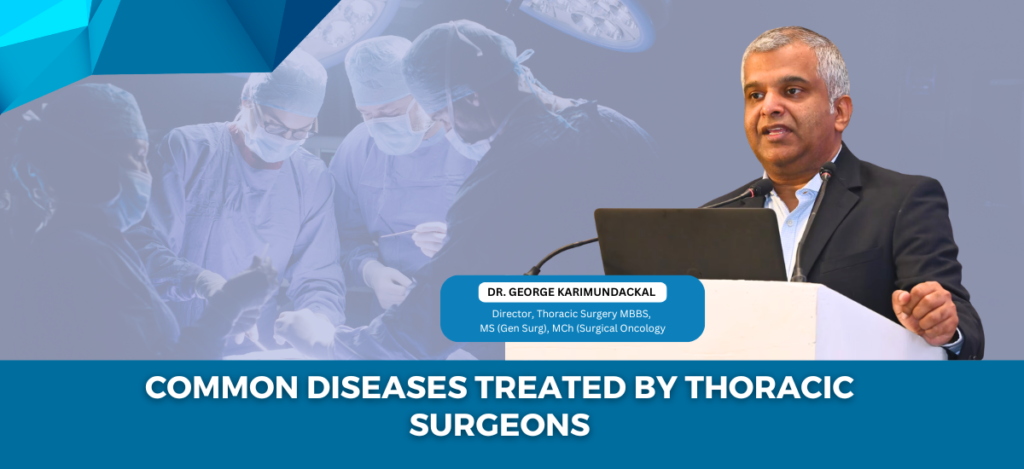
Thoracic surgeons specialize in the diagnosis and surgical treatment of chest diseases, including conditions of the lungs, heart, esophagus and other structures within the chest cavity. They perform complex surgeries to restore respiratory function, manage cancers, and treat congenital and acquired disorders. The role of a thoracic surgeon is crucial in treating a wide range of common and rare chest conditions, significantly improving patients’ quality of life and survival outcomes.
Dr. George Karimundackal says, “Timely intervention by the thoracic surgeon will considerably improve not only the quality of life but also the long-term outcome, especially in complex conditions of the chest.”
Dr. George Karimundackal is a renowned thoracic surgeon in Mumbai, specializing in lung cancer and other chest conditions. He has extensive proficiency in minimally invasive surgery and has made significant contributions to field.
What exactly does a thoracic surgeon do, and how are they different from other specialists? Let’s discuss the role of a thoracic surgeon and when you should seek their help.
Who is a Thoracic Surgeon?
A thoracic surgeon is a medical specialist who undertakes surgeries concerning the chest area. This means these surgeons specialize in surgeries on the lungs, heart, esophagus and diaphragm. These surgeons are different from pulmonologists and general surgeons in the context that they focus specifically on surgical interventions.
Pulmonologists are medical experts who deal with the diagnosis and treatment of diseases of the lungs by non-surgical techniques.
General surgeons, on the other hand, can nonetheless carry out surgeries on any part of the body, although they might not handle the intricate procedures that are normally required when treating conditions of the chest area.
Scenarios or circumstances that often require a referral to a thoracic surgeon include complaints from the patient, which may linger, such as a chronic cough, shortness of breath or abnormal results on imaging studies, which may show mass in chest. When conservative management of the symptoms has shown no relief, surgery is the next option.
Experiencing persistent chest symptoms? Connect with a specialist to evaluate your condition and explore treatment options.
Thoracic surgeons manage lung cancer patients by performing tumor removal procedures. The surgeries can be conducted through open or minimally invasive techniques such as VATS. The chances of patients surviving longer increase when their tumors are detected early, surgically removed and treated. Chemotherapy and radiation can be used to improve the survival rates.
Pleural Diseases
Diseases such as pleuritis, pleural effusion and mesothelioma can affect the pleura, or the pleural membranes surrounding the lungs. Thoracic surgeons can provide treatment that may include thoracentesis or pleurectomy.
When damaged bronchial tubes lead to chronic infections, thoracic surgeons may undertake surgery to remove infected tissue if the infections do not clear up with the use of antibiotics and physiotherapy.
Conditions like tracheal stenosis as well as airway obstructions disrupt normal breathing. Thoracic surgeons address these problems through surgery, which enhances airflow and effective lung function.
Esophageal Diseases
Thoracic surgeons also take care of patients suffering from achalasia, esophageal cancer, GERD and many other diseases by performing surgery to remove tumors or repair the esophageal tissue.
Tumors in the mediastinum, such as lymphoma or thymoma, can be treated by thoracic surgeons through surgery to remove them and relieve symptoms such as chest pain.
Thoracic surgeons also take care of abnormalities relating to the chest wall, which include rib fractures and pectus carinatum. These can be corrected by surgery to restore function and reduce pain.
Hyperhidrosis and Sympathectomy
Excessive sweating is treated by sympathectomy, the removal of part of sympathetic nerve causing sweating, and this is carried out by thoracic surgeons.
Diagnosed with a chest condition? Reach out to a thoracic expert to explore advanced treatment options.
What about rare or complex thoracic conditions? Let’s explore some of the more advanced conditions treated by thoracic surgeons.
Advanced and Less Common Thoracic Conditions
Though commonly occurring diseases such as lung cancers and pleural diseases are well documented, there are a few complex and less common diseases that require innovative surgical techniques for effective management.
Tracheal Tumors
Rare tumors found in the windpipe that block the airflow and require surgical removal or intervention.
Pulmonary Fibrosis
Scarred lung tissues that make it difficult to inhale, which may even require surgery or transplantation.
Bronchial Atresia
A congenital defect in which part of bronchial tubes does not develop properly and requires surgical removal of the blocked lung tissue.
Congenital Diaphragmatic Hernia
A birth defect that causes a child’s abdominal organs to move to the chest managed through a surgery that repairs the diaphragm.
Pulmonary Arteriovenous Malformations (AVMs)
Abnormal artery-vein connections in the lungs causing shortness of breath, treated with embolization or surgery.
Esophageal Atresia
A birth defect where the esophagus doesn’t develop properly, needing surgery to connect it for normal swallowing.
Spontaneous Pneumothorax
Sudden lung collapse without trauma, often caused by ruptured air blisters, requiring surgery to prevent recurrence.
Chest Wall Malformations
Rare deformities like pectus excavatum or carinatum, requiring surgical correction for both function and appearance.
Cystic Lung Diseases
Rare conditions like LAM or pulmonary Langerhans cell histiocytosis, requiring lung transplantation or surgical resection.
What innovative techniques do thoracic surgeons employ today? Let’s dive into the latest surgical advancements transforming patient care.
Modern Surgical Techniques
Advancements in surgical techniques have revolutionized thoracic surgery, making procedures less invasive, more precise, and allowing for faster recovery times. Here are some of the cutting-edge techniques used by thoracic surgeons today:
A minimally invasive technique where small incisions and a camera are used to guide surgery in the chest. VATS allows for quicker recovery, less pain, and reduced risk of complications compared to traditional open surgery.
Surgeons use robotic systems to perform highly precise operations with smaller incisions, thereby enhancing accuracy and improving patient outcomes, particularly in delicate procedures such as lung cancer resection.
Endobronchial Ultrasound (EBUS) and Electromagnetic Navigation Bronchoscopy (ENB):
These techniques provide real-time imaging and navigation during bronchoscopy, allowing surgeons to locate and biopsy tumors or abnormal tissue deep within the lungs with minimal invasiveness.
Minimally Invasive Esophagectomy:
This technique is used to remove portions of the esophagus in esophageal cancer patients, using small incisions and video guidance. It reduces hospital stay and speeds up recovery compared to traditional open surgery.
Robotic-Assisted Sympathectomy:
For treating hyperhidrosis (excessive sweating), robotic surgery is used to target the sympathetic nerves that cause the condition, providing patients with a minimally invasive solution.
Thoracic Endovascular Aneurysm Repair (TEVAR):
A less invasive procedure used to treat aneurysms in the aorta, allowing surgeons to repair the vessel without large incisions, reducing recovery time and complications.
Cryoablation and Radiofrequency Ablation:
These techniques use extreme cold or heat to destroy abnormal or cancerous tissue in the lungs or other thoracic organs, often used in patients who are not candidates for traditional surgery.
What warning signs indicate you should see a thoracic surgeon? Let’s discover the symptoms that may require expert evaluation.
Warning Signs That Require Consultation
There are some symptoms or signs that may be indicative of an underlying illness and as such, the skills of a thoracic surgeon may be required. These early warning signs must be identified on time.
Persistent Chest Pain: Ongoing chest pain or discomfort that doesn’t improve with rest or medication.
Chronic Cough: A cough that lasts for more than a few weeks, especially if it produces blood or mucus.
Shortness of Breath: Difficulty breathing or feeling breathless even with minimal activity.
Unexplained Weight Loss: Unintentional weight loss without changes in diet or exercise.
Coughing Up Blood: Hemoptysis (coughing up blood) can indicate a serious underlying condition like lung cancer.
Fatigue: Extreme or unusual tiredness that doesn’t improve with rest.
Wheezing: Unexplained wheezing or a tight chest, especially when it’s associated with other symptoms.
Abnormal Imaging Results: If chest X-rays, CT scans, or other imaging show unusual findings, further consultation with a thoracic surgeon may be needed.
You should consult a thoracic surgeon if you experience persistent chest symptoms, abnormal imaging, or if conservative treatments fail to provide relief.
Yes, minimally invasive procedures like VATS are highly effective for treating many thoracic conditions, offering quicker recovery and fewer complications.
Recovery varies depending on the procedure, but most patients experience less pain and faster recovery with minimally invasive surgeries compared to traditional open surgery.