- Have any questions?
- 085913 90567
- drgeorgechestdiseases@gmail.com

Lung Cancer: Symptoms and Treatment Plan

What is Lung Cancer Surgery Cost in India?
April 13, 2026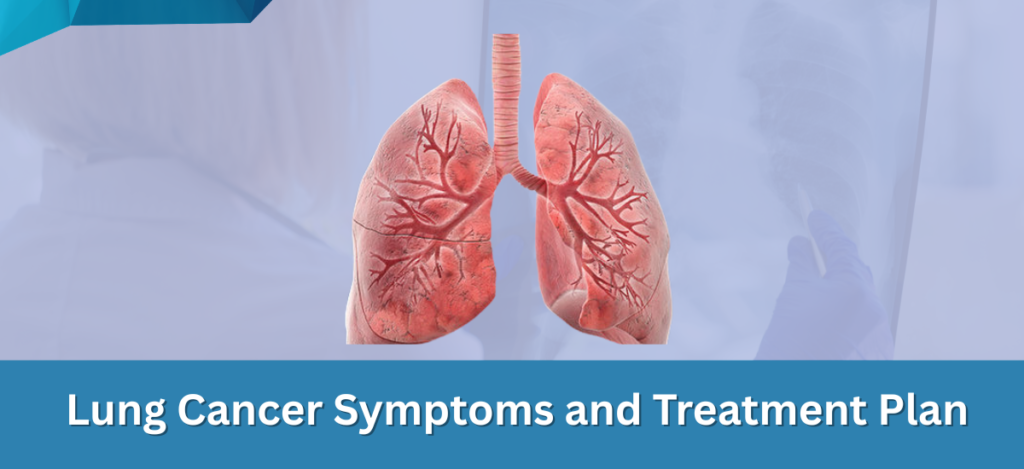
Lung Cancer: Symptoms and Treatment Plan
Lung cancer is asymptomatic in early stages which is why most diagnoses happen later than they should.When symptoms do appear the most common are a persistent or worsening cough, chest pain,shortness of breath,wheezing and coughing up blood.Treatment is stage based where early stage disease is treated with surgery while advanced stages use chemotherapy targeted therapy radiation or immunotherapy sometimes in combination to manage symptoms and improve survival.
According to Dr. George Karimundackal, one of the most experienced lung cancer specialists in Mumbai, the patients who do best are almost never the ones who waited for a classic cough. They acted on something less obvious. An aching shoulder that wouldn’t settle. Facial swelling that didn’t respond to treatment. A voice change their GP caught early.
Take control of your lung health today. Consult a specialist for expert advice on your symptoms and treatment options. Book your appointment now!
What is Lung Cancer?
Cells mutate, stop following normal division rules, and keep multiplying when they shouldn’t. That’s the mechanism. What it produces is a tumour that invades surrounding lung tissue and eventually spreads — through lymph nodes, through the bloodstream, to the adrenals, the brain, the bones. 1.8 million people die from this every year, which makes it the single biggest cancer killer globally. In India the picture has shifted. The disease is increasingly common among people who have never smoked, particularly women in urban and semi-urban areas, driven by indoor cooking smoke and occupational exposures that don’t appear in standard risk factor checklists.
What Causes Lung Cancer?
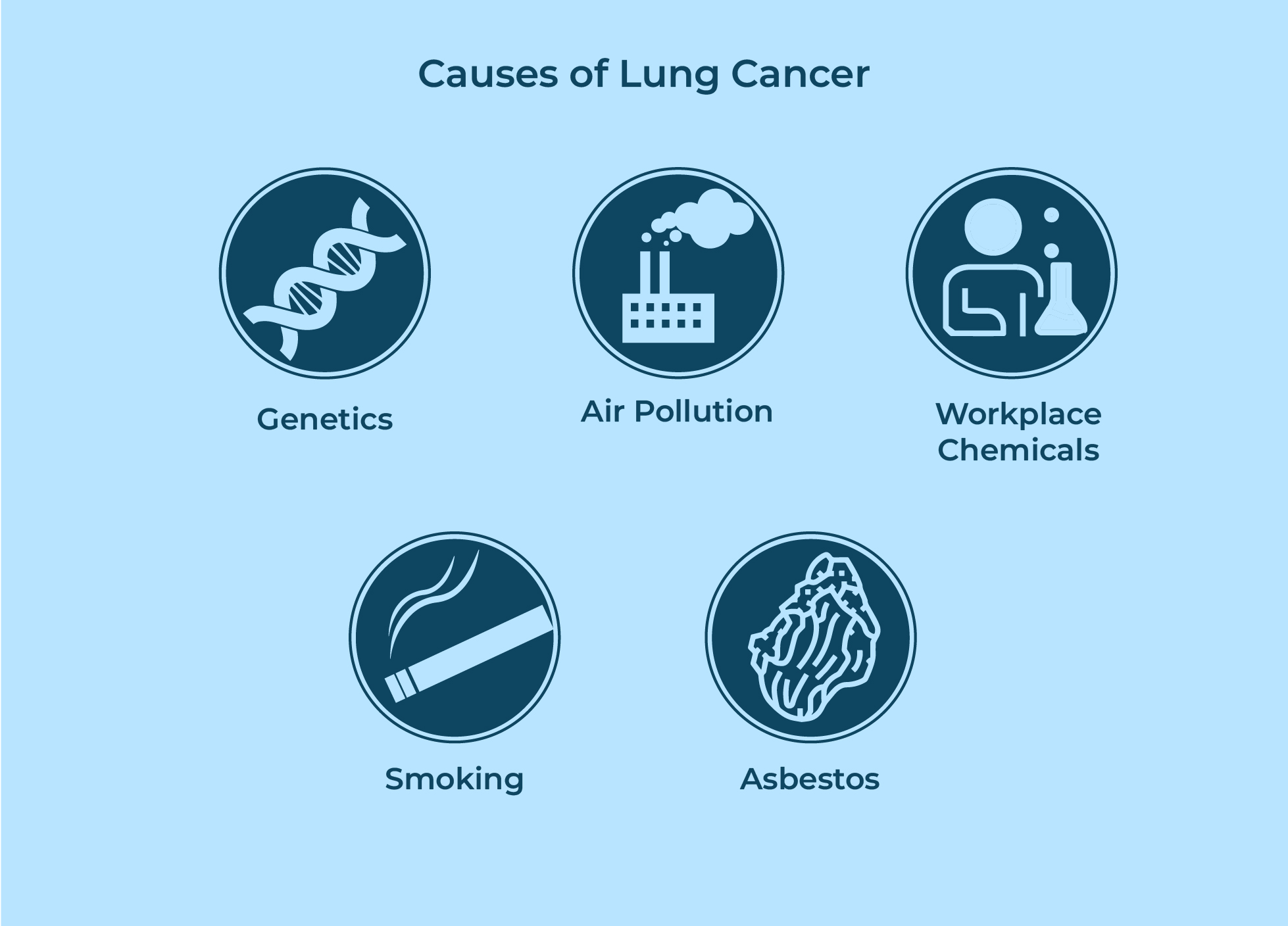
Smoking is the most common cause globally. In India, it’s more complicated. Occupational carcinogens — diesel exhaust, silica, chromium, nickel, arsenic — are documented lung carcinogens in workers who never touched a cigarette. Prior radiotherapy to the chest for lymphoma or breast cancer is another one that catches people off guard, because the lung cancer risk can emerge 15 to 20 years after treatment when most patients have stopped thinking about their original diagnosis entirely. COPD independently raises lung cancer risk through chronic airway inflammation, no smoking history required. Indoor cooking over biomass fuels in poorly ventilated kitchens is a significant risk factor in rural India that public health messaging almost never addresses. And female never-smokers develop adenocarcinoma at rates that genuinely don’t match their exposure histories — oestrogen receptors on some adenocarcinoma cells may be part of the explanation, though the research is still incomplete.
What are the Types of Lung Cancer?

Adenocarcinoma — roughly 40% of all cases, peripheral location, the subtype most common in never-smokers, and the one most likely to carry EGFR, ALK, or ROS1 mutations that open the door to targeted oral therapy. Squamous cell carcinoma sits centrally in the larger airways, is almost exclusively a smoking-related disease, and while it rarely carries targetable mutations it does respond to checkpoint inhibitors at meaningful rates.
Then there are the less common ones. Large cell neuroendocrine carcinoma behaves more like small cell than standard NSCLC and carries a worse prognosis at any equivalent stage. Carcinoid tumours — typical ones grow slowly and rarely spread, atypical ones need more aggressive surgical management. And pleural mesothelioma, which technically isn’t lung cancer at all — it arises from the pleural lining, is almost always the result of asbestos exposure, and has a latency period of 20 to 50 years between that exposure and the diagnosis. Patients presenting with mesothelioma often genuinely cannot identify when or where the asbestos contact happened.
What are the Symptoms of Lung Cancer?
The well-known symptoms tend to appear after disease has already progressed. These are the earlier and less recognised presentations.
- Persistent shoulder or arm pain on one side without any injury — Pancoast tumours at the lung apex compress the brachial plexus well before any chest symptom appears and this gets misdiagnosed as a rotator cuff problem for months in a significant number of patients who eventually turn out to have lung cancer.
- Facial swelling. Superior vena cava compression.
Paraneoplastic syndromes affect roughly 10% of lung cancer patients before any respiratory symptom appears.
- Lambert-Eaton myasthenic syndrome — proximal muscle weakness worsening with repeated activity, strongly linked to SCLC, and appearing months before the primary tumour is visible on any imaging.
- Horner syndrome from sympathetic chain involvement: drooping eyelid, small pupil, absent sweating on one side of the face.
- Hypercalcaemia. PTH-related peptide. Squamous cell carcinoma. Confusion, thirst, constipation — investigated as metabolic before anyone images the chest.
- New one-sided wheezing from partial bronchial obstruction by an endobronchial tumour, entirely different from bilateral asthma-type wheezing and consistently underrecognised in primary care because no one is listening for it.
- Low sodium on routine bloods in a smoker. SIADH.
- Clubbing and periosteal bone pain months before any chest symptom in some NSCLC patients.
If you notice any of these symptoms don’t ignore them. Consult an expert for a thorough evaluation. Book your appointment now!
How is Lung Cancer Diagnosed?
Most people eligible for low-dose CT screening aged 50 to 80, 20 pack-year smoking history have no idea they qualify which is a problem because LDCT reduces lung cancer mortality by 20% compared to chest X-ray in that group.Endobronchial ultrasound does mediastinal lymph node biopsy in real time through a bronchoscope no surgical incision, which is why experienced thoracic centres now use it instead of mediastinoscopy for nodal staging.
PET-CT. Finds metabolically active disease at distant sites that standard CT misses in roughly 10 to 15% of cases adrenal glands, bone, contralateral lung. Liquid biopsy pulls circulating tumour DNA from a blood sample and profiles mutations without tissue. Most useful when tissue from the original biopsy ran out before the full panel was done, or when re-biopsy would carry real procedural risk. Next-generation sequencing replaced single-gene testing because one panel now covers EGFR, ALK, ROS1, KRAS G12C, MET exon 14, BRAF V600E, RET, NTRK, and PD-L1 simultaneously. Brain MRI is not optional for stage 3 and 4 NSCLC 10% have brain metastases at diagnosis and that changes the entire treatment sequence.
Treatment for Lung Cancer

- Resectable stage 3A NSCLC now gets neoadjuvant immunotherapy before surgery at most experienced centres pembrolizumab and nivolumab both established as standard pre-operative options by KEYNOTE-671 and CheckMate 816 with meaningfully improved pathological complete response rates compared to surgery alone.
- Patients who can’t tolerate an operation due to lung function or comorbidity aren’t automatically excluded from curative-intent treatment. SBRT delivers ablative radiation in 3 to 5 sessions with stage 1 local control rates comparable to resection.
Chemotherapy is not automatically the starting point anymore. The mutation is what determines the treatment which is why profiling has to happen first.
- EGFR in 30 to 40% of Indian NSCLC patients treated with osimertinib; ALK with alectinib or lorlatinib both outperform chemotherapy significantly in the right molecular subgroup, which is exactly why the profiling matters before a single treatment decision is made.
- Oligometastatic resection for selected stage 4 patients with spread to 1 to 3 sites after multidisciplinary tumour board review.
- Segmentectomy non-inferior to lobectomy for tumours under 2cm per JCOG0802 trial 2023 — for stage 3 specifically read Can Stage 3 Lung Cancer Be Treated With Surgery?
- MDT review before any treatment begins. Always.
What are the Side Effects of the Treatment?
- Immune-related adverse events from checkpoint inhibitors pneumonitis, colitis, hepatitis, endocrinopathies with pneumonitis being the most dangerous complication in this patient group given the baseline lung disease, and some severe cases simply not resolving with steroids.
- Post-thoracotomy pain syndrome in 20 to 40% of open surgery patients neuropathic intercostal pain that VATS reduces but doesn’t eliminate.
- Peripheral neuropathy from platinum chemotherapy in feet and hands, often persisting months or years after the last cycle cisplatin is considerably worse than carboplatin for this and the distinction matters when choosing the regimen.
Which side effects actually materialise depends almost entirely on which treatment is being given.
- Osimertinib carries a small QT prolongation and ejection fraction risk baseline cardiac assessment before starting is now standard at most experienced centres.
- Radiation pneumonitis appearing 2 to 6 months post-radiotherapy, mild cases responding to steroids, severe cases progressing to fibrosis that is permanent.
- Immune-mediated adrenal insufficiency from checkpoint inhibitors presenting as fatigue, weight loss, hypotension requires lifelong steroid replacement and most patients never connect it to the immunotherapy unless a clinician explicitly makes that link for them.
Understanding side effects in advance helps patients make more informed decisions about treatment sequencing. For a full overview of how lung cancer is managed surgically read about lung cancer treatment in Mumbai at Nanavati Max Super Specialty Hospital.
When to Consult the Doctor?

Shoulder pain that has lasted weeks without a clear orthopaedic explanation in a current or former smoker should trigger chest imaging, not another course of physiotherapy. Same goes for hoarseness 3 weeks or more in a smoker warrants laryngoscopy and a chest X-ray before anything else.
- Facial or neck swelling with distended neck veins and no allergic or cardiac explanation. Superior vena cava syndrome.Needs imaging urgently.
- Unexplained low sodium on routine bloods in a smoker SIADH from a lung primary is on the differential and chest imaging should be part of the workup alongside the nephrology referral, not instead of it.
The other presentations that get missed are neurological. New limb weakness or gait instability in any patient with a significant smoking history should prompt chest imaging as part of the initial workup before the neurology referral goes in. Cognitive slowing that doesn’t fit a psychiatric or degenerative explanation in a smoker is the same situation.
- Raised calcium on routine bloods without an obvious endocrine cause —hypercalcaemia from PTH-related peptide secretion by squamous cell carcinoma is real and missing it costs months.
- An incidental lung nodule on imaging done for any other reason. Regardless of size. Regardless of what the radiology report says about it. Formal thoracic specialist follow-up is what this requires.
Conclusion
The diagnosis getting delayed because the symptoms didn’t look like cancer is the one outcome that modern treatment can’t fix.Consulting Dr. George Karimundackal at Nanavati Max ensures biomarker status surgical eligibility and staging are properly evaluated before any treatment plan is committed to.
Don’t wait for symptoms to escalate.Early intervention is critical. Consult a specialist for a personalised treatment plan. Book an appointment now!
Frequently Asked Questions
1.What is the difference between adenocarcinoma and squamous cell carcinoma of the lung?
Location is the starting point. Adenocarcinoma grows in the outer lung and shows up in never-smokers more than any other subtype it’s also the one most likely to carry EGFR ALK, or ROS1 mutations, which is what makes it targetable with oral drugs. Squamous cell sits centrally near the large airways,almost always in smokers, and rarely carries those same mutations. Different disease, different treatment conversation entirely.
2.What is a driver mutation in lung cancer?
The genetic fault the cancer is running on. Block it and the cancer often stops growing. That’s why finding it before starting treatment matters more than most patients realise going in.
3.What is SBRT?
Ablative radiation compressed into 3 to 5 sessions instead of weeks of daily treatment. Designed for early-stage patients who can’t tolerate surgery lung function too low, heart too weak, age too advanced. Local control in stage 1 is genuinely comparable to what surgery achieves. Not a consolation prize.
4.Can lung cancer be detected through a blood test?
Liquid biopsy can find tumour DNA circulating in the blood and profile the mutations without needing a tissue sample useful when re-biopsy is risky or the first biopsy didn’t yield enough tissue for a full NGS panel. But it’s not a screening test. It was never built for that purpose and doesn’t perform reliably enough at early-stage disease to serve that role.
5.What is oligometastatic lung cancer?
Stage 4 that spread but only just. One site, maybe two or three. In the right patient with the right tumour biology this opens a genuinely different conversation: resect the primary, ablate the metastatic deposits, treat aggressively rather than palliatively. Not everyone qualifies. Multidisciplinary tumour board review is what decides that, not a single scan or a single opinion.
References
- National Cancer Institute. Lung Cancer Treatment — Patient Version. NIH. https://www.cancer.gov/types/lung/patient/lung-treatment-pdq
- Asamura H et al. Segmentectomy vs Lobectomy in Small-Sized Peripheral NSCLC. JCOG0802 Trial. https://pubmed.ncbi.nlm.nih.gov/36716407/